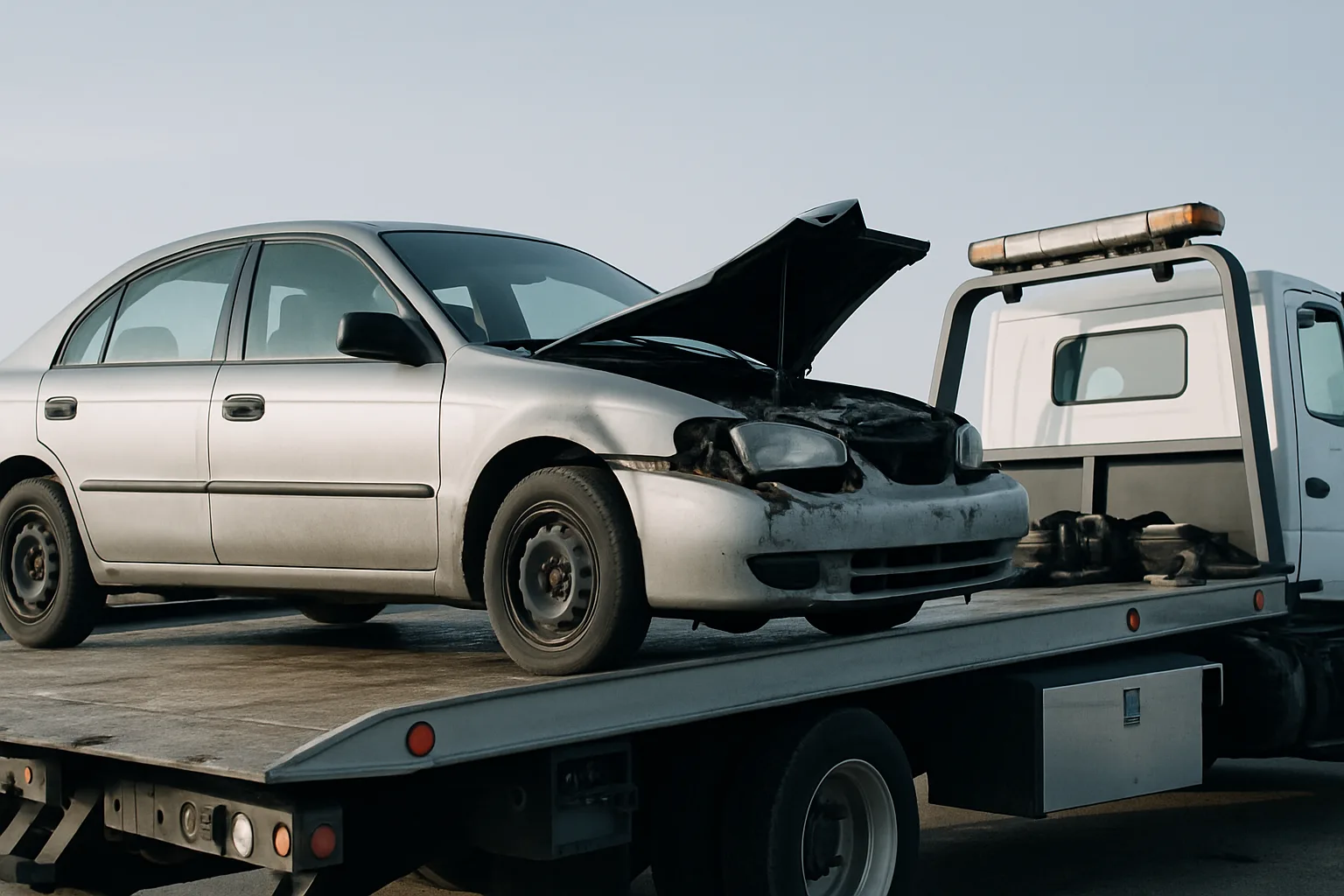
Most people think scrapping a car means one guy with a flatbed and a lowball offer. Fleet managers who've retired dozens of vehicles at once know the reality is messier — and the money left on the table can be significant.
Commercial fleet scrapping is a different animal than selling a single junk car. We're talking about multiple vehicles, mixed condition, different makes and models, sometimes spread across multiple lots. Done right, it generates real recovery value. Done the old way — one call, one buyer, one price — and you're almost certainly leaving money behind.
This piece breaks down exactly how commercial fleet vehicles get scrapped and recycled, what drives their value, and how operators in Spokane and across Washington are getting smarter about the process. If you need to sell my car fast Spokane — whether it's one vehicle or twenty — the same principles apply.
What Actually Happens When a Fleet Vehicle Gets Scrapped
The recycling process for a commercial vehicle — a delivery van, a work truck, a retired utility vehicle — follows a sequence that most owners never see. Understanding it changes how you approach the sale.
Here's the typical flow once a vehicle hits a recycling yard:
- Depollution — Fluids are drained first. Engine oil, transmission fluid, brake fluid, coolant, and refrigerant are all extracted and handled separately. This is non-negotiable — yards are required to do this before any crushing or shredding.
- Parts harvesting — High-value components get pulled. Catalytic converters (cats) are among the most valuable. Alternators, starters, copper wiring, and reusable cores all come off before the shell goes anywhere near a shredder.
- Ferrous separation — The steel body and frame get shredded and sorted. Ferrous metal (iron and steel) goes one direction; non-ferrous (aluminum, copper, zinc) goes another. Each commands a different price.
- Final processing — Shredded metal gets sold to mills and foundries that melt it down and produce new steel or aluminum. That material eventually becomes new vehicles, appliances, or construction materials.
For a fleet manager, the key insight is this: the more you know about what's in your vehicles before you call a buyer, the better your negotiating position. A 2019 Ford Transit with an intact cat and copper wiring harness is worth meaningfully more than a stripped shell — and buyers know it. You should too.
What Drives Scrap Value in Commercial Fleet Vehicles
Fleet vehicles aren't all equal when it comes to scrap value. Several factors move the number, and knowing them helps you time a sale and set realistic expectations.
Vehicle weight is the baseline. Heavier trucks and vans carry more steel. A three-quarter-ton pickup has significantly more ferrous metal than a compact sedan — that difference matters when free scrap car pickup from GetMyScrapCar is calculated by weight at the yard.
Beyond raw weight, here's what else affects fleet scrap value:
- Catalytic converter presence — Cats contain platinum, palladium, and rhodium. These are among the most actively traded scrap commodities in North America. An intact cat on a fleet diesel can add real dollars to your total.
- Aluminum content — Many newer commercial vans use aluminum body panels and components. Non-ferrous metals trade at higher per-pound rates than steel.
- Copper wiring — Commercial vehicles often have more wiring than passenger cars. Copper is a high-value non-ferrous metal. Intact harnesses are worth more than cut or damaged ones.
- Engine and drivetrain condition — Running vehicles or those with rebuildable engines can fetch more from buyers who want cores or parts, not just shred weight.
- Current scrap metal prices — This one is out of your control, but it's real. Scrap metal prices fluctuate with global steel demand, commodity markets, and regional supply. Timing a fleet disposal during a price upswing matters.
Checking scrap metal prices today before you commit to a buyer isn't paranoia — it's basic due diligence. Platforms like find the best price for your scrap on SMASH give sellers visibility into what the market is actually doing, rather than taking a single buyer's word for it.
The Old Way Fails Fleet Sellers — Here's Why
For decades, the standard approach to fleet disposal was simple: call the yard you know, get a number, take it or leave it. That model made sense when information was scarce and buyers were few. It doesn't make sense now.
When you call one buyer, you get one price. That buyer has zero incentive to offer market rate — they know you have no comparison point. For a single junk car, the stakes are manageable. For a fleet of fifteen or twenty vehicles, a below-market offer compounds into a significant gap.
Fleet managers in Spokane who've gone through this process describe the same frustration: they knew they weren't getting full value, but they had no efficient way to find it. The logistics of calling multiple yards, tracking offers, managing documentation for multiple vehicles — it eats time and energy most operations don't have.
This is exactly the gap that transparent, competitive platforms exist to close. More buyers seeing your inventory means more competition. More competition means better price discovery. It's not complicated — it's just not how the industry has traditionally worked.
How SMASH Changes the Fleet Scrapping Equation
SMASH was built for exactly this scenario. A recycling yard or fleet operator lists their vehicles — with photos, condition notes, VIN lookups, and documented inventory — and vetted buyers across North America compete for the load.
No subscription fees. No guessing. No single buyer holding all the information.
For fleet vehicles specifically, SMASH's documentation tools matter. Serial tracking, photo documentation, and detailed inventory listings give buyers the confidence to bid aggressively. A buyer who can see exactly what they're getting — intact cats, aluminum panels, copper wiring harness — will bid more than a buyer walking in blind.
That's the core logic: documented inventory gives buyers more confidence, and confident buyers bid higher. Competition can help reveal the market. More buyers means better price discovery.
If you're managing fleet disposal in Washington state and haven't explored auction-format selling, you're likely leaving money on the table. The auto-invoicing and BOL handling built into SMASH also cuts the administrative load — which matters when you're processing multiple vehicles at once.
Junk Car Removal Near Me: What Spokane Fleet Owners Should Know
For individual vehicle owners or small fleets in the Spokane area, the process is simpler — but the same principles around documentation and competition apply.
Getting cash for junk cars Spokane starts with knowing what you have. Even a non-running vehicle has scrap value. The weight of the vehicle, the condition of the catalytic converter, and the presence of intact non-ferrous components all factor in. Don't accept the first number you're given without understanding the basis for it.
Local Spokane scrap metal services can handle single-vehicle pickups and move fast — often same-day or next-day. If you need to schedule your free scrap car removal, the process is straightforward: provide vehicle details, get a quote, confirm pickup. No title? Depending on the vehicle's age and condition, options exist — ask upfront.
Washington state has specific requirements around vehicle titles and transfer documentation. Make sure the service you use handles the paperwork properly. A legitimate buyer will ask for your title or walk you through the process if you don't have one. If they skip that conversation entirely, that's a flag.
For more practical guidance on navigating the process, read more junk car removal guides — covering everything from what documents you need to how scrap pricing is calculated.
What to Expect From the Scrap Car Recycling Process in 2026
The scrap vehicle market in 2026 reflects broader commodity market pressures. Steel demand from manufacturing and construction continues to drive ferrous scrap pricing. Precious metal markets — directly tied to catalytic converter values — remain active. Fleet electrification is also changing the landscape: older ICE vehicles are being cycled out faster, increasing the volume of end-of-life vehicles hitting recycling yards.
For sellers, this creates both opportunity and volatility. Scrap metal prices today can shift week to week based on global demand signals. Locking in a sale during a price upswing — rather than holding vehicles and hoping the market improves — often makes more financial sense than timing the market.
The most consistent advantage isn't timing the market perfectly. It's ensuring you have competition for your vehicles when you do sell. That's true whether you're scrapping one junk car in Spokane or retiring a commercial fleet across Washington.
If you're ready to find out what your vehicle is actually worth, getting a free quote costs nothing. Free scrap car pickup from GetMyScrapCar means you get a number without committing — and pickup at no cost to you. That's the right starting point for any seller who wants to make an informed decision rather than guess.
Frequently Asked Questions
Q: How fast can I sell my car fast in Spokane?
Most scrap car pickups in the Spokane area can be scheduled within 24 to 48 hours of accepting a quote. Same-day pickup is often available depending on location and vehicle condition. Having your title ready speeds the process significantly.
Q: How is cash for junk cars in Spokane calculated?
Scrap car value is based primarily on vehicle weight, current scrap metal prices, and the condition of high-value components like catalytic converters and non-ferrous metals. The make, model, and year also factor in when buyers assess parts value versus shred value. Prices fluctuate — always check current rates before committing to a buyer.
Q: Do I need a title to scrap a car in Washington state?
In most cases, yes — Washington requires a title to transfer ownership of a vehicle to a scrap buyer. If you've lost your title, you can apply for a duplicate through the Washington Department of Licensing. Some yards have specific processes for older vehicles, so ask upfront about your situation.
Q: What happens to my car after junk car removal near me picks it up?
The vehicle goes through depollution first — all fluids are drained and handled properly. High-value parts like catalytic converters and copper wiring are removed. The remaining steel body is shredded and sold to steel mills, where it's melted and recycled into new metal products.
Q: Can I scrap a fleet of vehicles at once in Spokane?
Yes. Fleet disposal is handled differently than single-vehicle pickup — buyers typically want detailed inventory, photos, and condition notes to assess a multi-vehicle lot. Platforms like SMASH are specifically designed for this, putting your fleet in front of multiple vetted buyers who compete for the load rather than giving you a single take-it-or-leave-it offer.
Disclaimer: Scrap metal prices fluctuate based on commodity markets, regional supply, and buyer demand. All pricing references in this article are general in nature. Check current rates before finalizing any sale.
Stay current on scrap metal market trends and industry insights by following SMASH on LinkedIn — practical updates for yards, fleet managers, and anyone moving metal.