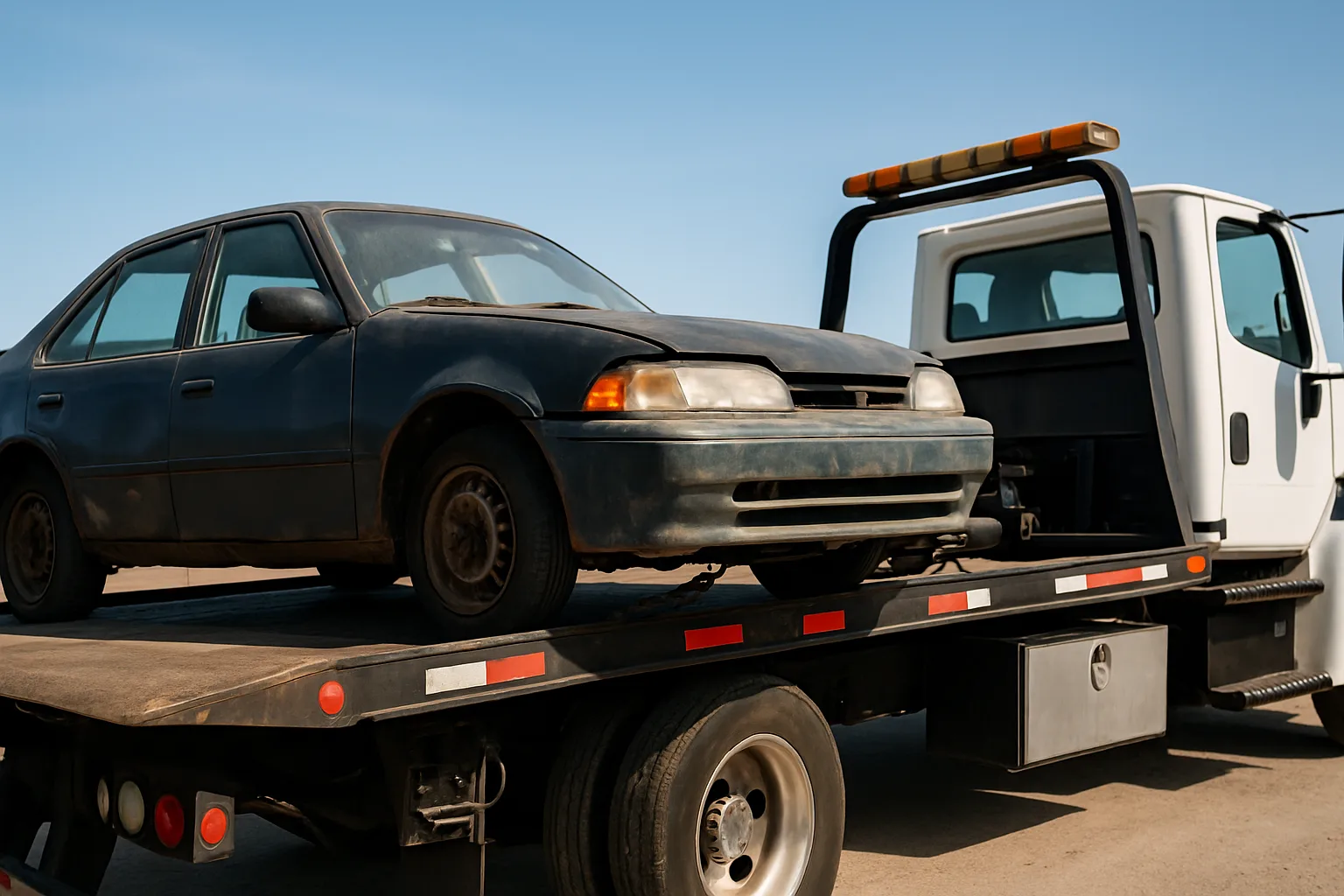
Most people don't think twice about what happens to a junk car after it leaves their driveway. But the average end-of-life vehicle contains over 80% recyclable material — and how you dispose of it matters more than you might expect. If you're ready to sell my car fast Jacksonville, you're not just getting rid of a problem. You're feeding a recycling chain that keeps thousands of tons of metal, rubber, and plastic out of landfills every single year.
This isn't a feel-good story about saving the planet with buzzwords. It's a practical look at what actually happens to your scrap vehicle, why eco-friendly disposal makes financial sense, and how Jacksonville vehicle owners are getting real value from the process — without the runaround.
What Eco-Friendly Car Disposal Actually Looks Like in 2026
The term "eco-friendly" gets thrown around loosely. In the scrap vehicle world, it has a specific meaning. A responsible disposal process follows a documented sequence — and skipping any step creates environmental and legal liability for everyone involved.
Here's how a compliant, environmentally responsible junk car removal process works:
- Fluid Drain and Containment — Before anything else, qualified processors drain engine oil, transmission fluid, brake fluid, power steering fluid, antifreeze, and refrigerants. These are hazardous materials. A single vehicle can contain several gallons of fluids that will contaminate soil and groundwater if mishandled.
- Battery Removal — Lead-acid batteries are pulled and sent to certified recyclers. Modern EVs and hybrids carry high-voltage battery packs that require specialized handling — a growing priority in Florida as electric vehicle adoption continues to climb.
- Catalytic Converter and Parts Harvesting — High-value components like cats, starters, alternators, and usable body parts are pulled for resale or reprocessing. This is where a lot of your car's residual value lives.
- Tire and Glass Separation — Tires go to rubber recyclers or retreaders. Glass is separated for cullet recycling. Neither belongs in a shredder.
- Shredding and Metal Separation — The stripped hulk goes to a shredder. Ferrous and non-ferrous metals are magnetically and electronically separated. Shredder residue — the leftover foam, fabric, and plastics — is the part the industry is still working to improve.
When this process is followed correctly, roughly 75-80% of your vehicle by weight gets recycled back into the materials supply chain. That's not marketing copy — that's the documented output of a properly run auto recycling operation.
Case Study: How One Jacksonville Owner Turned a Dead F-150 Into Fast Cash (and Zero Landfill Guilt)
Here's the kind of story that plays out every week in the Jacksonville market. A 2009 Ford F-150 with a seized engine, a cracked frame, and over 230,000 miles on it. No title in hand initially. Sitting in a driveway in the Arlington neighborhood for eight months. The owner had called one local buyer who offered a flat lowball number and never followed up.
When she connected with a platform that put her load in front of multiple vetted buyers — the kind of competitive process that get competitive bids for your scrap metal makes possible — the difference was immediate. Multiple buyers placed bids. She received a documented offer with a clear photo requirement for the vehicle condition. Pickup was scheduled within 48 hours. The truck was drained, stripped of its catalytic converter and usable parts, and processed at a licensed Florida facility. The title issue was resolved with a proper bill of sale.
The financial outcome was better than the single-buyer quote. The environmental outcome was fully documented. And she had proof — an actual paper trail — that the vehicle was disposed of responsibly. That matters in Florida, where vehicle title liability doesn't automatically end when your car leaves your property.
Why Jacksonville Is a Strong Market for Scrap Vehicle Recycling
Jacksonville's geography and infrastructure make it one of Florida's better markets for cash for junk cars Jacksonville transactions. Here's why that matters to you as a seller:
- Port access — JAXPORT is one of the largest vehicle-handling ports in the Southeast. Scrap metal and processed auto hulks move efficiently to domestic mills and overseas buyers, which keeps local demand relatively competitive.
- Mill proximity — There are steel processing facilities within a reasonable haul of Jacksonville. That proximity reduces transportation costs for processors, which can translate into better offers for sellers.
- Volume of end-of-life vehicles — Florida's vehicle population is massive, and Jacksonville alone has hundreds of thousands of registered vehicles. A significant percentage reach end-of-life every year, keeping the recycling ecosystem active and competitive.
- Regulatory environment — Florida has clear standards for hazardous waste handling in vehicle recycling. Licensed processors operate under DEP oversight. That protects you as the seller from unknowingly handing your car to an unregistered operation that dumps fluids in a back lot.
If you're searching for Jacksonville scrap metal services, the infrastructure is there. The key is connecting with buyers who are actually vetted and competing for your load — not just the first number a phone-based broker throws at you.
Scrap Metal Prices Today — What Drives Your Payout
Your car isn't just a car when it hits the scrap yard. It's roughly 2,500 to 4,500 pounds of mixed material, and the value of each component shifts with the market. Understanding what drives scrap metal prices today helps you time your sale and negotiate with confidence.
Here's what processors are actually pricing when they quote your vehicle:
- Shredded steel (ferrous) — The bulk of your car's weight. Prices fluctuate with steel mill demand and scrap export activity. A $20-30 per ton swing in shredded steel moves your total payout meaningfully.
- Catalytic converter content — Platinum, palladium, and rhodium inside the cat can represent a significant portion of your vehicle's value depending on the make and model. A domestic vehicle cat and a foreign nameplate cat are not worth the same thing. VIN lookup tools help processors — and you — understand what you actually have.
- Non-ferrous metals — Aluminum wheels, copper wiring, radiators. These are separated and priced independently. Don't let a buyer lump them into a single "scrap car" number without breaking it down.
- Usable parts — A functioning transmission, a good rear axle, or a door panel with no rust can add real dollars to your payout if the buyer is a full-service auto recycler rather than a pure scrap buyer.
Disclaimer: Metal prices fluctuate daily based on market conditions. Always check current rates before accepting a quote, and use competitive bidding to validate what you're being offered.
Platforms like SMASH give buyers the documentation they need — photos, VIN, condition notes — to price accurately and competitively. Better documentation means buyers bid with confidence. More confident buyers bid higher. That's not a pitch; that's how price discovery works.
How to Sell Your Car for Scrap Without Getting Burned
The scrap car market has friction points that trip up first-time sellers. Here's the practical checklist that keeps you protected and maximizes your return.
- Pull your title or confirm your options. Florida requires a title for most vehicle transfers. If yours is lost, you can apply for a duplicate through the FLHSMV. Some processors will work with a bill of sale and supporting documentation — but clarify this upfront.
- Remove personal belongings and plates. Florida plates belong to the owner, not the vehicle. Remove them. Surrender them to the DMV or transfer them to another vehicle.
- Document the vehicle's condition with photos. Timestamped photos protect you if any dispute arises about condition at pickup versus what was agreed.
- Get competing offers. One quote is a starting point, not a market price. Two or three quotes reveal the actual range. A competitive bidding process does this automatically.
- Confirm the processor is licensed. Ask for their recycler or dealer license number. A legitimate operation won't hesitate to provide it.
- Get written confirmation of disposal. A receipt or certificate of destruction protects you from future title or liability issues.
If you want to skip the homework and let a vetted process handle it, free scrap car pickup from GetMyScrapCar connects you directly with buyers who meet these standards — no cold calls, no guessing, no mystery quotes.
The Environmental Payoff Is Real — Here's Why It Matters Beyond the Feel-Good Factor
Environmental responsibility in vehicle recycling isn't just ethics — it has direct legal implications for Florida vehicle owners. If your car is improperly disposed of and it's traced back to you through the title record, you carry exposure. Proper disposal with documentation severs that liability.
Beyond personal protection, the numbers are genuinely significant. Recycled steel requires dramatically less energy to produce than virgin steel from iron ore. Every ton of scrap steel recycled saves roughly 1,400 pounds of coal, 2,500 pounds of iron ore, and 120 pounds of limestone, according to industry lifecycle data. A single junk car contributes meaningfully to that chain.
Recycled aluminum — primarily from wheels, engine blocks, and transmission cases — saves up to 95% of the energy required to produce primary aluminum. In a state like Florida, where summer energy demand is consistently high, that efficiency matters at a grid level.
When you schedule your free scrap car removal through a responsible platform, you're not just clearing your driveway. You're feeding a materials chain that reduces industrial energy consumption, reduces mining demand, and keeps hazardous vehicle fluids out of Florida's water table. That's a concrete, documented outcome — not a slogan.
Ready to move your junk car and do it right? Get a free quote and schedule free pickup at getmyscrapcar.com — the process is straightforward, the pickup is free, and your vehicle goes through a fully documented, environmentally responsible disposal chain.
Want to read more junk car removal guides before you make a move? The blog covers pricing, timing, title questions, and everything else you need to know.
Frequently Asked Questions
Q: How fast can I sell my car in Jacksonville, Florida?
Most scrap car pickups in the Jacksonville area can be scheduled within 24-48 hours once you confirm your offer and provide basic vehicle documentation. Factors like title availability and vehicle location can affect timing, but free same-week pickup is common with established services.
Q: Do I need a title to sell my junk car in Florida?
Florida generally requires a title to transfer vehicle ownership. If you've lost yours, you can apply for a duplicate through the Florida Highway Safety and Motor Vehicles (FLHSMV) office. Some licensed buyers can also work with supporting documentation in specific circumstances — ask your buyer upfront about their process.
Q: How is cash for junk cars in Jacksonville priced?
Your quote is based on the vehicle's weight, current scrap metal prices, catalytic converter content, and any usable parts value. Prices shift with the metal market, so getting multiple competing offers — rather than a single flat quote — gives you a much more accurate picture of what your car is worth today.
Q: Is free scrap car pickup really free?
Yes — reputable scrap car removal services include towing at no charge to you. The cost of pickup is factored into the buyer's offer. Be cautious of any service that quotes high over the phone and then deducts a surprise towing fee at pickup. Get the final net number confirmed in writing before scheduling.
Q: What happens to my car after it's picked up?
A properly processed end-of-life vehicle goes through fluid draining, parts harvesting (including catalytic converters and reusable components), and then shredding and metal separation. Roughly 75-80% of the vehicle by weight is recycled back into the materials supply chain. Ask your buyer for a certificate of destruction if you want documented proof of responsible disposal.
Stay current on scrap metal market trends and industry news — follow SMASH on LinkedIn for regular updates on scrap metal prices, market shifts, and recycling industry insights.
```