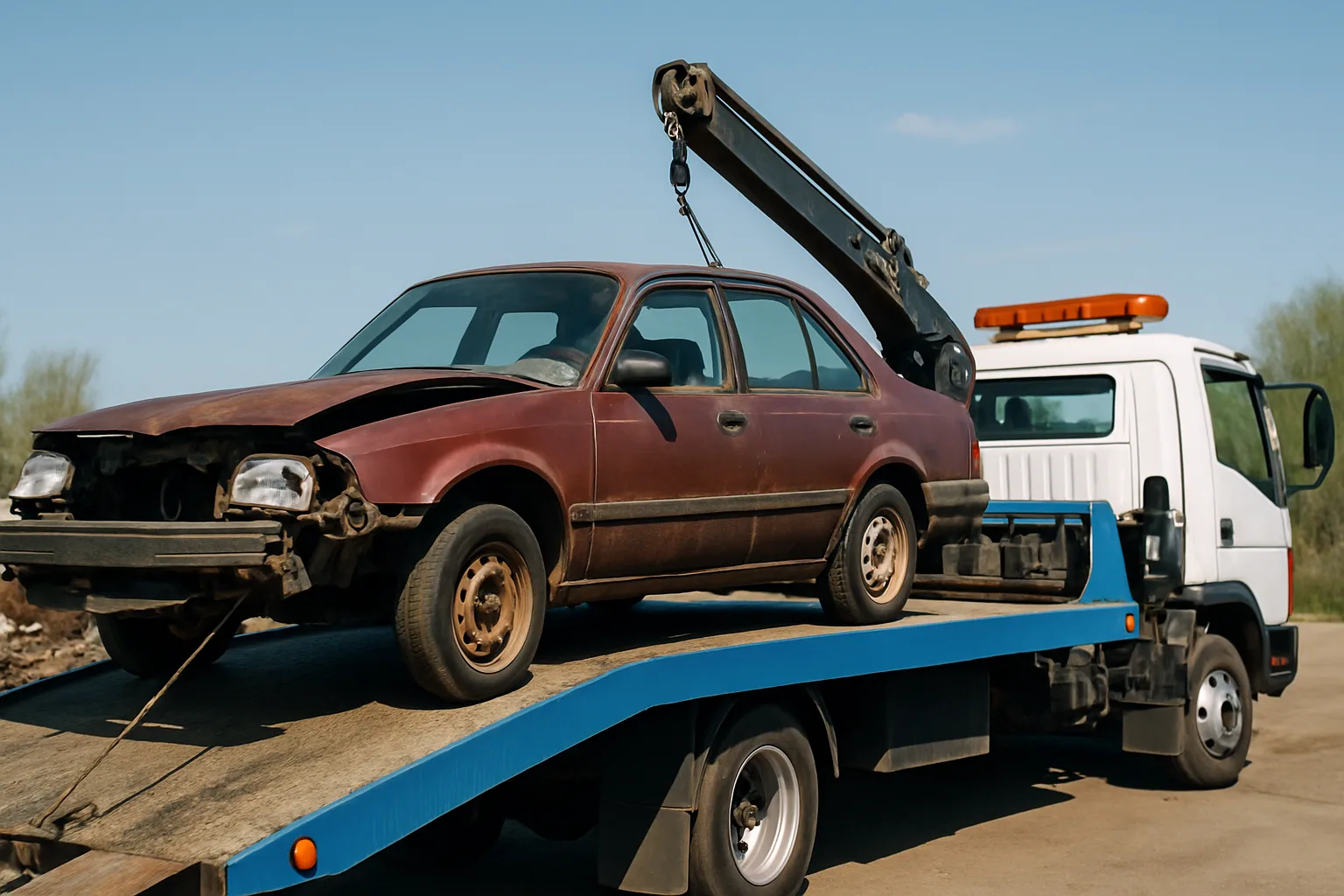
What Really Happens to Your Car After Junk Car Removal in Grand Forks
Most people hand over their keys, watch the tow truck pull away, and never think about it again. But if you've ever wondered what actually happens to your vehicle after junk car removal in Grand Forks, the answer is more structured — and more valuable — than you'd expect. Your old beater doesn't just disappear. It gets taken apart, sorted, processed, and fed back into the supply chain in ways that affect scrap metal prices across North Dakota and beyond.
This week's market recap breaks down the full lifecycle of a scrapped vehicle — from the moment it leaves your driveway to the moment its steel gets poured into something new. Understanding this process helps you make smarter decisions about timing, documentation, and where to sell.
Step One: The Vehicle Arrives at the Auto Recycler
When your car gets picked up — whether you're going through free scrap car pickup from GetMyScrapCar or another service — it typically heads to a licensed auto recycler or salvage yard. In North Dakota, these facilities operate under state and EPA environmental guidelines, which means the first thing that happens isn't stripping — it's inspection and documentation.
The yard logs the vehicle by VIN, checks title paperwork, and assigns it to a processing queue. This is where things get interesting. Not every car gets treated the same way. A 2010 truck with low mileage and intact parts gets sorted differently than a 2001 sedan that's been sitting in a field for three years. The yard is making a calculation before anyone touches a wrench.
- VIN registration — recorded against state and national databases to confirm clear title
- Condition grading — determines parts-first or shred-first processing
- Environmental flagging — checks for known fluid leaks, airbag status, or hazmat concerns
Step Two: Fluid Extraction and Hazmat Removal
Before any metal gets touched, every vehicle goes through a depollution stage. This is non-negotiable at any licensed facility. A single car contains a surprisingly long list of regulated fluids and materials — and none of them can go into the shredder or the ground.
Trained technicians drain and recover engine oil, transmission fluid, coolant, brake fluid, power steering fluid, and fuel. Batteries get pulled and routed to battery recyclers. Airbag modules that haven't deployed get carefully removed — undeployed airbags are classified as hazardous devices and require special handling. Mercury switches, found in older vehicles, get extracted separately.
This stage alone can take 45 minutes to over an hour per vehicle. It's unglamorous work, but it's what separates a legitimate recycler from a backyard operation. If you're selling your car in Grand Forks, make sure the facility you're working with is licensed and follows proper depollution procedures. It protects you legally too.
High-Value Parts Get Pulled First — Including Catalytic Converters
Here's where scrap car value today gets real. After depollution, a skilled parts puller walks the vehicle and pulls anything with resale or high-scrap value. This isn't random — experienced recyclers follow a priority list based on current market demand and commodity prices.
Catalytic converters are typically the first thing off the vehicle. They contain platinum group metals (PGMs) — platinum, palladium, and rhodium — and their value fluctuates significantly with the commodities market. Prices in 2026 have remained volatile, so yards watch this closely. If you're scrapping a vehicle with an intact cat, that's a meaningful part of your car's overall value.
Other high-priority pulls include:
- Engines and transmissions — if they're in rebuildable condition, they go to the parts resale side of the yard
- Aluminum wheels — non-ferrous metal with consistent demand
- Copper wiring harnesses — labor-intensive to pull, but copper prices make it worthwhile
- Radiators and condensers — aluminum/copper mix, solid scrap value
- Starters and alternators — cores with active buyer markets
- Intact glass, mirrors, and interior components — resold through the used parts market
Platforms like SMASH have changed how recyclers move these non-ferrous loads and cores. Instead of calling one buyer and guessing the price, yards can put material in front of vetted buyers and let competition do the work. That price discovery process is exactly what SMASH scrap is built for — and it means more accurate market value gets reflected back to sellers too.
What Happens to the Steel — The Shredder Stage
Once the high-value parts are out, what's left is predominantly steel — the body, frame, and remaining chassis components. This gets crushed or baled and sent to a metal shredder. Shredders are industrial machines that reduce an entire car body to fist-sized chunks of metal in under 60 seconds.
The shredded output, called "shred" or "auto shred," gets processed through separation equipment that sorts it by material type — ferrous (steel and iron) from non-ferrous (aluminum, copper, zinc) and from fluff (foam, plastics, glass fragments). The ferrous fraction gets sold to steel mills as feedstock for electric arc furnaces. The non-ferrous fraction gets sold separately to specialty buyers and smelters.
This is where sell scrap metal online platforms play a growing role. Yards with consistent shred volume can now auction loads to multiple buyers instead of relying on a single mill relationship. That shift matters for pricing — especially in a region like North Dakota, where logistical distance from major mills creates margin pressure. More buyer competition helps offset that.
For context, a typical passenger vehicle weighs between 3,000 and 4,000 pounds. At current scrap steel prices, the ferrous value alone can be meaningful — and that's before accounting for the non-ferrous and parts value that comes out earlier in the process. Note: scrap metal prices fluctuate daily based on commodity markets — always check current rates before making decisions based on price.
How Grand Forks Fits Into the Regional Scrap Market
Grand Forks sits in a region with strong agricultural and industrial vehicle turnover. Farm equipment, work trucks, and older fleet vehicles cycle through North Dakota's scrap stream regularly. That gives local recyclers consistent volume — but it also means the market is sensitive to regional logistics costs, including haul distances to processing facilities and mills.
If you're looking at cash for cars North Dakota options, understanding this regional context matters. A vehicle's payout isn't just about weight — it's about what's in it, the condition of its recoverable parts, and what the buyer's logistics look like on their end. Recyclers near Grand Forks factor in haul cost to their bids. That's not a knock on local buyers — it's just economics.
What levels the playing field is transparency and competition. When you schedule your free scrap car removal and work with services that connect your vehicle to a vetted buyer network, you stop leaving money on the table by defaulting to whoever answers the phone first. The Grand Forks scrap metal services available through connected platforms give you that access without extra legwork.
SMASH brings that same buyer competition model to the yard side of the equation. Recyclers processing vehicles in this region can use SMASH to move non-ferrous material, cores, and loads to buyers across North America — not just whoever's local. That keeps prices honest and documentation tight.
Title, Documentation, and Why It Matters for You
One thing that often catches first-time sellers off guard: the paperwork doesn't end when the truck leaves. Proper title transfer is legally required in North Dakota, and it protects you if the vehicle gets involved in any legal or liability issue after the sale. Don't hand over a car without getting confirmation of title transfer — in writing.
Reputable recyclers and removal services will handle this as part of the process. They'll provide a bill of sale, confirm title transfer with the state DMV, and in some cases issue a receipt that you can use to cancel your insurance and registration. If a buyer is vague about paperwork, that's a red flag.
Good documentation also supports better pricing. When a recycler has full vehicle history — VIN, title status, condition photos, mileage — buyers can bid with confidence. That confidence translates to stronger offers. It's not just bureaucracy. It's price signal. To read more junk car removal guides on documentation, title transfer, and what to expect as a seller, the blog is a solid resource.
Frequently Asked Questions
Q: How long does the whole process take after junk car removal in Grand Forks?
From pickup to full processing, most vehicles are depolluted and broken down within a few days of arriving at the yard. High-demand parts may be listed for resale within 24–48 hours. The steel shred component moves on a batch schedule that varies by yard volume and buyer demand.
Q: Does my car need to run to qualify for scrap car removal?
No. Non-running, wrecked, flooded, or otherwise undriveable vehicles are accepted for scrap removal. In fact, most junk car pickups involve vehicles that can't move under their own power. Towing is typically included at no charge.
Q: What affects my scrap car value today in North Dakota?
Key factors include the vehicle's weight, the condition and completeness of recoverable parts (especially catalytic converters, aluminum wheels, and copper), current commodity prices, and regional logistics costs. Scrap metal prices fluctuate — always verify current rates before accepting a quote.
Q: Do I need the title to sell my scrap car in Grand Forks?
In most cases, yes. North Dakota requires title transfer for vehicle sales, including scrap. Some buyers will work with vehicles where the title is lost, but you'll need to apply for a replacement through the ND DMV first. Having a clean title typically results in a better offer.
Q: What's the difference between a salvage yard and an auto recycler?
The terms are often used interchangeably, but technically, an auto recycler is a licensed facility that processes end-of-life vehicles according to environmental regulations — including fluid extraction and proper material disposal. A salvage yard may focus more on parts resale. Most modern facilities do both.
If you've got an end-of-life vehicle sitting in your driveway in Grand Forks, the process is simpler than most people think. Get a quote, confirm your paperwork, and let the recyclers do what they do best. Head to getmyscrapcar.com to get a free quote and schedule your pickup — no subscription, no runaround, just a straightforward offer on your vehicle.
Want to stay current on scrap metal market conditions, pricing trends, and industry moves? Follow SMASH on LinkedIn for weekly market insights and updates from the scrap and recycling industry.