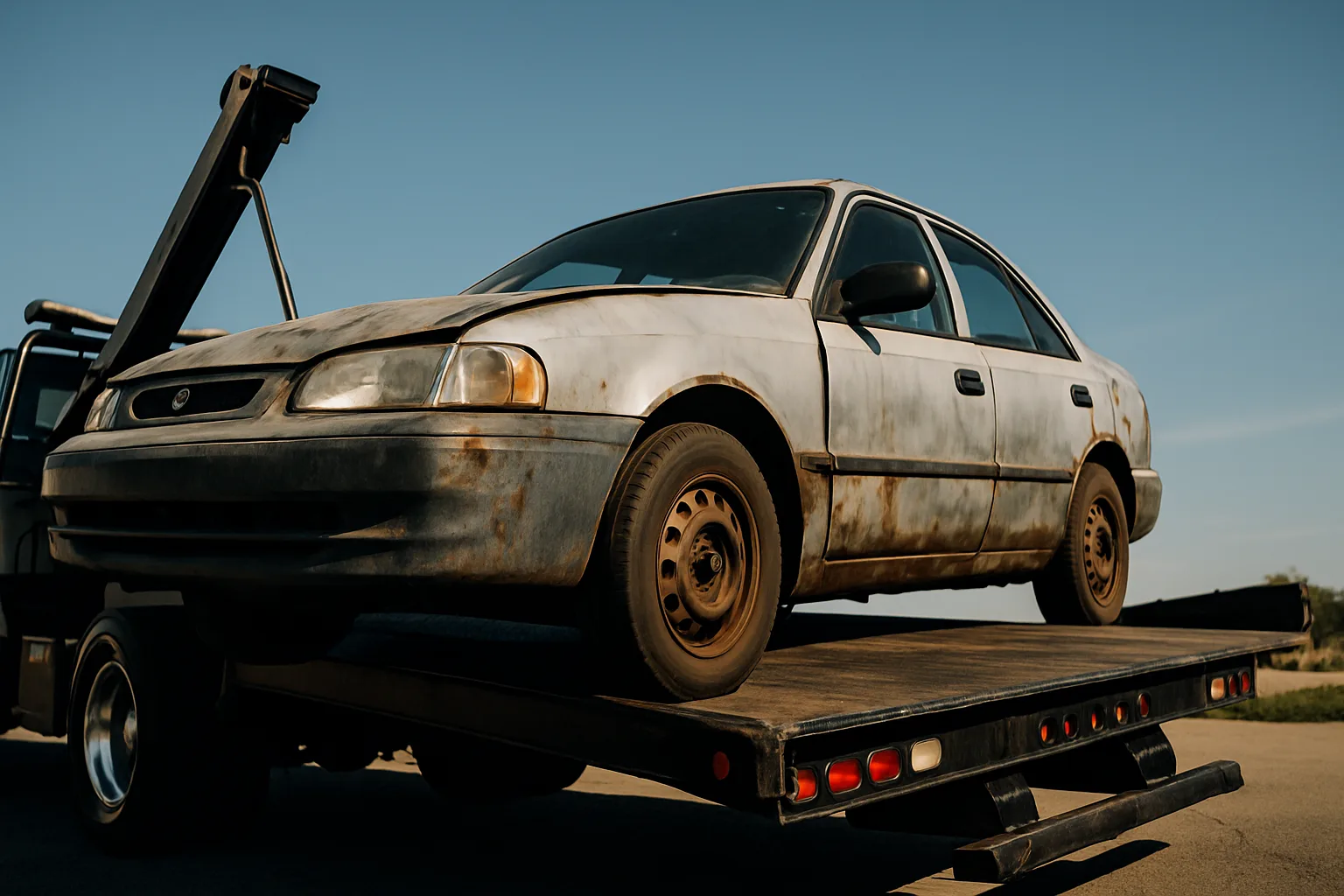
Most people have no idea what their junk car is actually worth — and the number is almost always different from what a single buyer tells you over the phone.
If you're sitting on a dead Chevy Silverado in your driveway in Dallas and someone offers you $200, should you take it? Maybe. But maybe not. The answer depends on a handful of real variables most sellers never think to ask about. This guide breaks down exactly how scrap car value gets calculated, what drives the number up or down, and how to make sure you're not leaving money behind when you sell my junk car Dallas.
No guesswork. No vague promises. Just the mechanics behind the number.
What Actually Determines Your Scrap Car's Value
Your junk car isn't just a lump of steel. It's a mix of ferrous metal, non-ferrous components, and potentially valuable parts — and each piece of that equation carries its own price. Understanding the breakdown helps you ask better questions and spot lowball offers.
Here's what a buyer or scrap yard is looking at when they quote your vehicle:
- Vehicle weight: Heavier vehicles yield more scrap metal. A full-size F-150 or Silverado brings in more raw steel than a compact Honda Civic. Most passenger cars weigh between 2,500 and 4,500 lbs — trucks and SUVs can run higher.
- Current scrap metal prices: Steel and iron prices fluctuate with global demand. Your car's value moves with the market, not a fixed rate. Always check current prices before accepting a quote.
- Catalytic converter: This single component can be the most valuable part of your entire car. It contains platinum, palladium, and rhodium — all precious metals. A converter off a late-model truck can outweigh the scrap value of the body itself.
- Non-ferrous metals: Copper wiring, aluminum wheels, and radiators add up. These metals price significantly higher per pound than structural steel.
- Reusable parts: If the transmission is intact, the engine runs, or the doors are undamaged, a parts buyer may value those components separately from scrap weight.
- Year, make, and model: Some makes hold parts demand longer than others. Older domestic trucks and Japanese sedans often have strong aftermarket parts demand in Texas.
The problem is most single-buyer offers bundle all of this into one flat number — and that number often doesn't reflect what competition would reveal. When you get competitive bids for your scrap metal, you see what the actual market will bear, not what one buyer wants to pay.
Why Dallas Sellers Often Get Less Than Their Car Is Worth
The Dallas scrap market is active. There are dozens of yards operating across the DFW area, and buyer demand for ferrous and non-ferrous material stays relatively steady given the region's industrial base. But activity doesn't automatically mean sellers get fair prices — it just means the opportunity exists.
The old way of selling a scrap car goes like this: you call one yard, they give you a number, you either take it or spend two hours calling around trying to compare. Most people take the first offer because the friction of shopping it around feels like more work than it's worth. That's exactly what single buyers count on.
In Texas, where scrap volumes are high and yards are competing for loads, that friction gap is real money. A vehicle with a high-value catalytic converter, aluminum rims, and intact interior components isn't worth the same as a stripped shell — but a flat over-the-phone quote often treats them identically. Platforms like SMASH exist to close that gap by bringing multiple vetted buyers to the same load. More buyers means better price discovery, not a guaranteed number, but a real one.
You can also explore Dallas scrap metal services to understand what local buyers are actively looking for right now.
The Realistic Range: What Junk Cars Sell For in 2026
Let's talk actual numbers — with the important caveat that scrap metal prices fluctuate constantly, and any figure you read today may not reflect what you'll receive next week. Always verify current market rates before committing to a sale.
With that said, here's a realistic framework for thinking about value:
- Compact car, running condition, all parts intact: Generally brings a premium over pure scrap weight because parts buyers compete with recyclers.
- Full-size truck or SUV, non-running but complete: Higher scrap weight works in your favor. Catalytic converter value can be significant depending on make and model year.
- Stripped shell with no cat, no wheels, no battery: You're selling steel. Price per ton drives the number entirely.
- Flood or fire-damaged vehicle: Reduced but not zero. Scrap metal value remains even if parts are unsalvageable.
- Classic or rare make with parts demand: May be worth more parted out than scrapped — worth exploring before committing to a full scrap sale.
The range is wide. That's the point. A vehicle with the right components at the right time in a competitive market can bring significantly more than a single buyer's flat quote suggests. If you want to sell my car fast Dallas without sacrificing value, the answer isn't to rush — it's to bring more buyers to the table simultaneously.
Disclaimer: Scrap metal prices fluctuate based on global commodity markets. All pricing examples are illustrative. Check current rates with local buyers and platforms before making any decisions.
How SMASH Changes the Equation for Scrap Vehicle Sellers
SMASH is a scrap metal auction platform that connects sellers directly with vetted buyers across North America. Instead of calling one yard and hoping for a fair number, you list your load — or in this case, your vehicle — and buyers compete. That competition is what moves the price toward market reality.
For scrap car sellers, here's what that process looks like in practice:
- Document your vehicle accurately. SMASH uses photo documentation, VIN lookup, and serial tracking to build a complete picture of what you're selling. Buyers bid with confidence when the inventory is clean and verified.
- Vetted buyers only. You're not dealing with random lowballers. Buyers on the platform are pre-qualified, which means faster transactions and fewer no-shows.
- Auction format creates competition. Multiple buyers bidding on the same vehicle drives the price toward its actual market value. Competition can help reveal the market in ways a single phone call never will.
- No subscription fees. SMASH only wins when the seller wins. You're not paying to list — you're paying when a deal closes.
- Auto-invoicing and documentation. The paperwork side gets handled cleanly, which matters when you're trying to sell scrap car in Texas and want a clear transaction record.
Whether you're a first-time seller with one vehicle or a yard operator moving multiple loads, documented inventory gives buyers more confidence — and more confident buyers bid higher. That's not a sales pitch. That's how competitive markets work.
What to Do Before You Accept Any Offer
Before you agree to a price from anyone — a yard, an app, or a cold caller — run through this checklist. It takes 20 minutes and can meaningfully affect the outcome.
- Locate your title (or know your state's title rules). In Texas, a title is required to transfer a vehicle. If yours is lost, apply for a duplicate before you start shopping the car. Note: requirements vary — for example, rules in Oregon for sellers asking about cash for cars no title Portland OR differ from Texas law. Know your state before you list.
- Identify your catalytic converter. Look up your VIN online and find out if your make/model has a high-demand converter. This single piece of information can change your negotiating position significantly.
- Pull the non-ferrous components. Aluminum wheels, copper wire, and radiators price differently than steel. A buyer buying the whole car will factor these in — but only if you know to ask about them.
- Get at least three offers. One offer tells you nothing. Three offers tell you where the floor is. A competitive auction platform like SMASH tells you where the ceiling is.
- Factor in pickup logistics. Free towing is standard with reputable buyers. If a buyer is quoting low and charging for pickup, the real offer is even lower. Always clarify whether towing is included.
For most Dallas sellers, the vehicle is sitting in a driveway, the registration is expired, and the goal is to turn it into cash quickly without hassle. That's completely reasonable. Free scrap car pickup from GetMyScrapCar makes the logistics side straightforward — no rental truck, no coordinating a tow, no waiting weeks for someone to show up.
Making the Call: When to Scrap vs. When to Part Out
Not every junk car should go straight to the shredder. If your vehicle has high-demand parts in good condition, parting it out first — then scrapping the shell — can return significantly more total value. It's more work, but for the right vehicle, it's worth it.
Here's a simple rule of thumb: if your car is under 15 years old, runs (or ran recently), and has intact mechanical components like a transmission, engine, or transfer case, get a parts quote alongside your scrap quote. Compare them. The difference is your decision.
If the car is older, heavily damaged, or stripped of major components, scrapping it whole is typically the faster and more practical route. Read more junk car removal guides to understand how different vehicle conditions affect your best path forward.
Either way, the goal is the same: get the car moved, get paid fairly, and don't leave value behind because you only talked to one buyer. When you're ready to sell my junk car for cash, knowing your options before you commit is the only move that makes sense.
Ready to find out what your car is actually worth? Schedule your free scrap car removal with GetMyScrapCar — get a quote, confirm pickup, and get paid without the runaround.
Frequently Asked Questions
Q: How much can I get for my junk car in Dallas, Texas?
The value depends on vehicle weight, condition, current scrap metal prices, and whether any high-value components like the catalytic converter are intact. Prices vary significantly based on market conditions, so it's worth getting multiple quotes. A single phone call to one yard rarely reflects what the market will actually pay.
Q: Do I need a title to sell my junk car in Texas?
In Texas, a title is generally required to legally transfer a vehicle. If you've lost yours, apply for a duplicate title through the Texas DMV before trying to sell. Some buyers may work with you on documentation, but having your title in hand makes the process faster and cleaner.
Q: How fast can I sell my junk car in Dallas?
With the right buyer and clean paperwork, same-day or next-day pickup is common in the Dallas area. Having your title ready and knowing basic details about your vehicle — year, make, model, and condition — speeds up the quote and scheduling process considerably.
Q: Will they tow my car for free when I sell it?
Reputable scrap car buyers and removal services include free towing as part of the deal. Always confirm this upfront. If a buyer is quoting you a price and separately charging for pickup, calculate the real offer — it may be lower than it looks.
Q: What if my junk car doesn't run? Can I still sell it?
Yes. Non-running vehicles are bought and scrapped every day in Texas. The car doesn't need to drive — it just needs to be accessible for pickup. A flatbed or tow truck handles the rest. The vehicle's scrap metal value exists regardless of whether it starts.
Stay sharp on scrap metal market trends — follow SMASH on LinkedIn for industry updates, pricing insights, and platform news across North America.
```