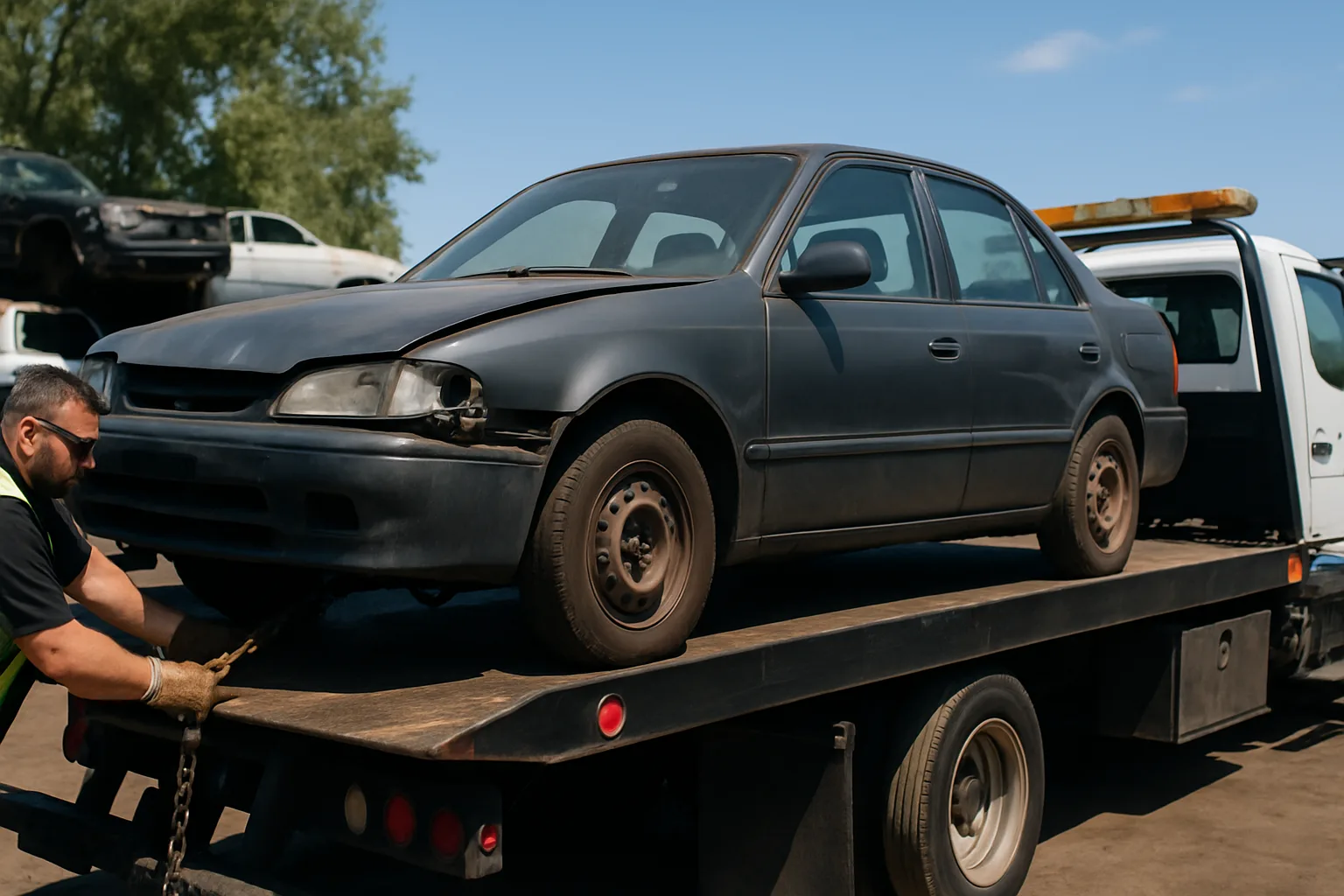
Most people hand over their keys, watch the tow truck pull away, and never think twice about what happens next. But if you've ever wondered what actually goes on after scrap car removal Houston crews haul your vehicle off your property — the answer is more structured, more regulated, and more valuable than most people expect.
Auto recyclers aren't junkyards in the old sense. They're processing facilities operating under strict state and federal environmental rules. In Texas, that means documented fluid removal, part cataloging, materials sorting, and detailed scrap metal inventory management — all before a single pound of steel gets crushed or shredded. Understanding this process helps you make smarter decisions about who you sell to, what your car is actually worth, and why documentation matters more than ever in 2026.
Step One: Depollution — Removing Every Hazardous Fluid First
The moment your car arrives at a licensed auto recycling facility, the first job is depollution. This isn't optional. Texas Commission on Environmental Quality (TCEQ) regulations require that all end-of-life vehicles be drained of hazardous materials before any crushing, shredding, or dismantling begins. Skipping this step isn't just illegal — it's an environmental liability that serious recyclers won't touch.
Here's what gets removed and documented in this phase:
- Engine oil and transmission fluid — drained and stored for re-refining or disposal
- Coolant (antifreeze) — collected separately, often reclaimed
- Brake fluid and power steering fluid — hazardous, handled accordingly
- Gasoline — remaining fuel siphoned before the vehicle is moved to dismantling
- Refrigerant (freon) — recovered using certified EPA Section 609 equipment
- Mercury switches — found in older vehicles, flagged and removed before shredding
This process typically takes 30 to 90 minutes per vehicle depending on its condition and age. A 2008 sedan with multiple leaks takes longer than a clean 2015 pickup. Either way, nothing moves forward until the vehicle is environmentally cleared. This is one reason why choosing licensed junk car buyers near me Houston matters — unlicensed operators skip this step entirely, and that creates legal exposure for everyone in the chain.
Dismantling and Parts Harvesting: Where the Real Value Lives
After depollution, skilled dismantlers go to work. This is where your car's value starts to show. Parts that are still serviceable — engines, transmissions, alternators, starters, doors, hoods, mirrors, seats — get pulled, tested where possible, cataloged, and listed for resale. A functioning used transmission on a common platform like a Ford F-150 or Toyota Camry can sell for hundreds of dollars in the used parts market.
Catalytic converters ("cats") are one of the highest-value components pulled at this stage. They contain platinum, palladium, and rhodium — all precious metals with real market value. In 2026, cat theft remains a major issue across Texas, which is exactly why scrap metal inventory management at this level requires serial number tracking, photo documentation, and proper chain-of-custody records. Reputable recyclers log every cat they pull with VIN-level traceability. This isn't bureaucracy — it's how the industry protects itself and its customers from liability.
High-demand parts pulled during dismantling often include:
- Engines and transmissions (especially from high-volume platforms)
- Catalytic converters — always tracked by VIN
- Alternators, starters, and AC compressors
- Doors, fenders, and body panels in good condition
- Infotainment systems and instrument clusters from newer vehicles
- Tires and rims still within usable tread spec
What doesn't get harvested goes to the next stage. And that's where the bulk metal story begins.
How Junk Car Prices Per Ton Are Actually Calculated
Once a vehicle has been depolluted and stripped of recoverable parts, what's left is the "hulk" — the bare steel shell. At this point, the economics shift from parts value to raw material value, and that's where junk car prices per ton become the dominant metric.
A typical full-size American sedan hulk weighs between 2,500 and 3,500 pounds after stripping. A pickup truck hulk runs heavier — often 3,500 to 5,000+ pounds. The steel from these hulks feeds shredders that reduce them to fist-sized chunks of shredded steel (also called "shred" or "shredded scrap"). That shred gets sold to steel mills as raw feedstock for making new steel.
The price recyclers pay you for your car is directly tied to:
- Current scrap steel prices — which fluctuate with global demand, energy costs, and supply chain conditions
- Vehicle weight — heavier vehicles yield more raw metal
- Parts value estimate — vehicles with intact, sellable components command higher offers
- Non-ferrous metal content — copper wiring, aluminum wheels, and brass fittings add up
- Catalytic converter value — especially relevant on pre-2010 vehicles with high precious metal content
This is why quotes vary so much. When you use a platform like sell your scrap metal on the SMASH marketplace, you're getting competitive bids from multiple vetted buyers rather than a single cold-call number from one buyer guessing low. More buyers means better price discovery — and that's not marketing language, that's just how markets work.
Disclaimer: Scrap metal prices fluctuate with market conditions. Check current rates before accepting any offer.
Scrap Metal Inventory Management: Why Documentation Changed Everything
The scrap industry has gone through a serious documentation overhaul over the past decade, and 2026 is proof of how far things have come. Texas has some of the most detailed secondary metal dealer requirements in the country, including mandatory record-keeping for vehicle purchases, photo documentation, and seller identification requirements.
Modern auto recyclers use digital scrap metal inventory management systems to track every vehicle from arrival to final sale. That means:
- VIN scanning at intake — cross-referenced against theft databases before purchase
- Photo documentation — timestamped images at multiple processing stages
- Serial number tracking on high-value components like cats and engines
- Bill of lading (BOL) generation for all outbound loads
- Packing lists for non-ferrous material sales to smelters and mills
This level of documentation protects you as the seller, too. If your car is properly logged and processed, there's a clean paper trail that removes you from any future liability. That matters especially if your vehicle has been sitting for years or if you're dealing with a title situation. Speaking of which — free scrap car pickup from GetMyScrapCar handles vehicles in all kinds of title situations, including paperwork guidance for sellers without clean documentation.
Platforms like SMASH take inventory management a step further by requiring buyer accountability on every transaction — vetted buyers, documented offers, and auto-invoicing that creates a clean record on both sides of the deal. For Houston yards moving volume, that's not a luxury. That's how you stay compliant and competitive at the same time.
What Happens If You Don't Have a Title — Cash for Cars No Title Near Me
This question comes up constantly, and the answer varies by state. In Texas, the rules around selling a vehicle without a title depend on the vehicle's age and the type of buyer. Some junk car buyers are licensed to accept bonded titles or use alternative documentation for vehicles over a certain age. Others won't touch a no-title vehicle at all.
If you've been searching for cash for cars no title near me free pickup options in the Houston area, here's what you should know going in:
- Texas law requires title transfer for most vehicle sales, but licensed dismantlers may have pathways for older vehicles
- A Texas bonded title or court-ordered title can sometimes substitute for a standard title
- Some buyers will accept a bill of sale for very old vehicles (typically pre-1995) in certain situations
- Always ask the buyer upfront what documentation they need — before the tow truck shows up
The worst thing you can do is hand over your car without getting any documentation in return. Even if you don't have a title, you should receive a signed purchase receipt or bill of sale from the buyer. That's your protection. For Houston scrap metal services that walk you through the paperwork step by step, GetMyScrapCar works with sellers across the Houston metro to make this process straightforward — title or not.
From Your Driveway to a Steel Mill: The Full Picture
Here's the complete lifecycle, start to finish, after your car leaves your property:
- Vehicle arrival and intake — VIN scan, photo documentation, seller records logged
- Depollution — all hazardous fluids removed and documented per TCEQ standards
- Parts dismantling — saleable components harvested, cataloged, and listed for resale
- Hulk preparation — remaining shell cleaned and staged for shredding
- Shredding or baling — steel processed into shred or baled for transport
- Non-ferrous sorting — copper, aluminum, and other non-ferrous materials separated after shredding
- Sale to end buyers — shredded steel sold to mills, non-ferrous sold to smelters
That old car sitting in your Houston driveway doesn't disappear — it gets reborn as structural steel in a new building, recycled aluminum in a new engine block, or copper wiring in a new appliance. The auto recycling industry diverts millions of tons of material from landfills every year. Your car is part of that cycle.
When you're ready to move it, schedule your free scrap car removal through GetMyScrapCar and skip the guesswork. You'll know who's picking up your car, what they're paying, and why — before the truck ever arrives. And if you want to go deeper on how scrap pricing and buyer competition affect your payout, read more junk car removal guides on the GetMyScrapCar blog.
Frequently Asked Questions
Q: How long does it take for my car to be processed after scrap car removal in Houston?
Processing timelines vary by facility, but most licensed auto recyclers in the Houston area begin depollution within 24 to 72 hours of vehicle arrival. Full dismantling and parts cataloging can take anywhere from a few days to two weeks depending on the recycler's volume and your vehicle's make and model.
Q: Do junk car buyers near me in Houston run a VIN check before purchasing?
Reputable buyers do — and Texas law effectively requires it. Licensed secondary metal dealers are required to check vehicles against theft databases before completing a purchase. If a buyer skips this step, that's a red flag worth paying attention to.
Q: How are junk car prices per ton determined in Texas?
Prices are based on current scrap steel market rates, vehicle weight, parts value, and the non-ferrous metal content of the specific vehicle. Prices fluctuate frequently — sometimes week to week — so it's worth getting multiple quotes before committing to a sale.
Q: Can I get cash for my car with no title in Houston?
In some cases, yes. Texas has specific rules around no-title vehicle sales, and some licensed dismantlers have pathways for older vehicles using alternative documentation. Always ask the buyer upfront and make sure you receive a signed purchase receipt regardless of your title situation.
Q: What happens to the catalytic converter on my scrapped car?
Licensed recyclers remove and catalog catalytic converters at dismantling, tracking them by VIN to comply with Texas regulations around precious metal recovery. Cats contain platinum, palladium, and rhodium, making them one of the most valuable single components on an end-of-life vehicle. Their value is typically factored into your overall vehicle offer.
Follow SMASH on LinkedIn for ongoing scrap metal market updates, industry regulation news, and insights that help both sellers and buyers stay ahead of the market.