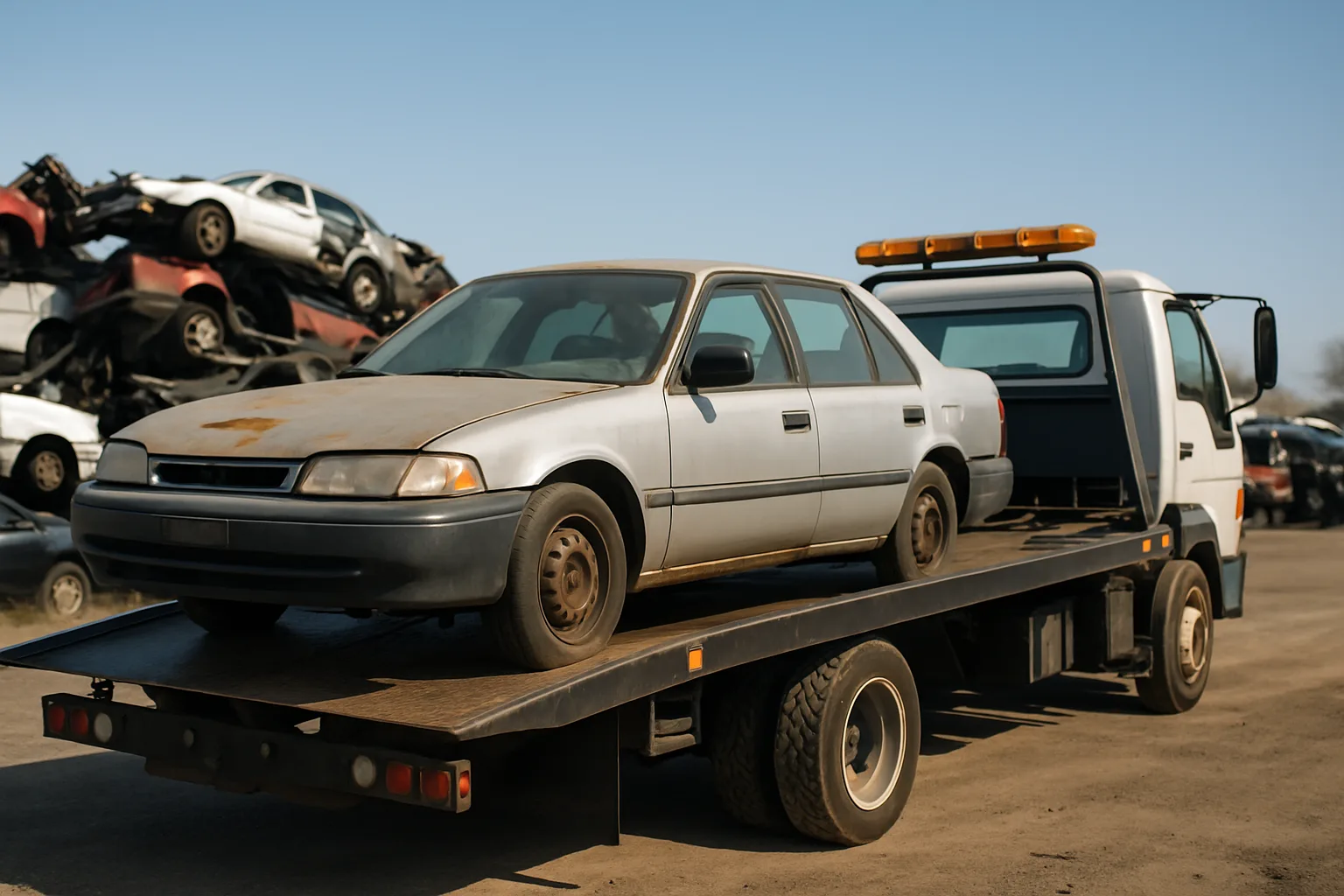
Most vehicle owners in New York use these three terms interchangeably. That's a costly mistake. The facility you choose when you're ready to sell your junk car directly affects how much cash ends up in your pocket — and how fast you get it. Understanding the difference between a junkyard, salvage yard, and auto recycler isn't trivia. It's money.
If you've been searching for junk car buyers near me New York, you've probably noticed that results look wildly different. Some operations strip cars for parts. Some crush them immediately. Some do both — and some will lowball you regardless of what they call themselves. This guide breaks it all down so you can make a smarter decision.
---The Three Types of Facilities — What They Actually Do
These aren't just different names for the same thing. Each facility operates differently, values vehicles differently, and serves a different end market. Here's the real breakdown.
Junkyards
A junkyard is the original end-of-life vehicle facility. Cars arrive, get stripped of anything useful by staff or customers, and the remaining shell gets crushed and sold to a scrap metal processor. Many traditional junkyards operate "u-pull-it" lots where the public walks the yard and removes parts themselves. The facility makes money on part sales and scrap metal weight. Your car gets valued almost entirely on its scrap metal weight — not its parts, not its model year, not its condition.
Salvage Yards
Salvage yards go deeper. They disassemble vehicles more methodically, cataloging usable parts and selling them to repair shops, mechanics, and individual buyers. A salvage yard might hold a 2019 Honda Accord for months, selling the transmission, alternator, doors, and seats individually before the shell goes to scrap. Because they extract more value from the vehicle, a good salvage yard may offer you more than a straight junkyard — but only if your car has desirable parts in working condition. A completely totaled or high-mileage beater with no viable parts is worth the same at a salvage yard as a junkyard: its scrap weight.
Auto Recyclers
Auto recyclers are the most structured of the three. They often operate under environmental compliance frameworks, handle fluid extraction and hazardous material disposal properly, and may be certified under programs like the Automotive Recyclers Association (ARA). They process vehicles for both parts recovery and material recycling — including steel, aluminum, copper wiring, and non-ferrous metals. A certified auto recycler in the New York metro area is legally obligated to handle coolant, oil, brake fluid, and refrigerants responsibly. That matters for both the environment and your liability once the car leaves your hands.
---How Each Facility Prices Your Vehicle — And Where Cash for Cars New York Quotes Come From
Here's where the real difference shows up. When you call around looking for cash for cars New York, the quote you get depends almost entirely on which type of facility you're calling — and what their current market looks like.
Junkyards price by weight. Period. They'll ask for the year, make, model, and whether the engine is present. They look up current scrap steel prices, estimate the car's weight, apply a margin, and give you a number. That number moves daily based on commodity markets. A mid-size sedan typically weighs between 3,000 and 4,000 pounds — which means scrap value alone can range significantly depending on what steel is trading at that week.
Salvage yards price by parts value plus scrap residual. If your car has a working catalytic converter, a desirable engine, or low-mileage components, a salvage yard may factor that into the offer. Speaking of catalytic converters — the metals inside them (platinum, palladium, rhodium) are valuable non-ferrous commodities. Platforms that run a catalytic converter auction format, like SMASH, create real competition between buyers for those cores, which means better price discovery than a single yard quoting you in isolation.
Auto recyclers may offer the most nuanced pricing, especially if they have buyer networks or auction-style procurement. They understand that a vehicle is worth more than its crushed steel weight, and their pricing often reflects the sum of parts, fluids recovered, and scrap material — not just one number based on tonnage.
- Junkyard offer: Based on scrap weight and current steel prices
- Salvage yard offer: Weight + usable parts premium (if applicable)
- Auto recycler offer: Full material and parts assessment, may include non-ferrous value
What This Means If You Want to Sell My Junk Car Without a Title Near Me
Title requirements vary by facility type and by state. In New York, most licensed auto recyclers and salvage yards are required to collect the title as part of the legal transfer. This protects them — and frankly, it protects you too. Selling a car without proper documentation can create liability down the road if the vehicle gets abandoned, ticketed, or involved in something you don't want your name attached to.
That said, some junkyards operate with more flexibility around documentation, especially for very old vehicles or situations where the title is genuinely lost. If you're searching for sell my junk car without title near me, here's what you need to know:
- New York DMV allows you to apply for a duplicate title — often faster than you'd expect.
- Some facilities will accept a bill of sale plus your government-issued ID for vehicles over a certain age.
- Licensed recyclers will almost always require the title or DMV documentation. Don't be surprised — that's the legitimate route.
- Beware of anyone who offers to "handle the paperwork" on your behalf with no documentation from you. That's not a favor. That's a risk.
The cleanest path is always to transfer the title properly. Services like free scrap car pickup from GetMyScrapCar walk you through the documentation you need before pickup, so there are no surprises on the day.
---The New York Advantage — And Why Location Matters More Than You Think
If you're dealing with a junk car in New York City or anywhere across the broader New York metro region, you have something working in your favor: density. There are more licensed buyers, more salvage operations, and more auto recyclers per square mile in this market than almost anywhere in the country. That means competition — and competition is how you get a better number.
The problem is that most vehicle owners still call one buyer, take the first offer, and move on. That's the old way. It works fine until you find out the neighbor who sold a similar car two weeks later got $300 more by making three phone calls.
Platforms like sell your scrap metal on the SMASH marketplace bring that same competitive auction logic to scrap vehicle components — particularly high-value items like catalytic converter cores. Instead of one buyer setting the price, you get vetted buyers competing for the material. More buyers means better price discovery. That's not a promise of more money every time. It's how markets are supposed to work.
For New York scrap car sellers specifically, it's worth exploring your New York scrap metal services options before committing to the first quote. The market is active. Use it.
And if you're curious how junk car pricing compares across state lines — say, looking at junk car prices Massachusetts versus New York — the short answer is that regional scrap metal demand, local buyer competition, and state regulations all factor in. Northeast markets tend to be strong, but New York's buyer density gives it an edge in most categories.
---Which Type of Facility Should You Choose When You Want to Sell Scrap Car in New York?
It depends on your vehicle's condition and what you're optimizing for.
If your car is completely wrecked, burned, or stripped: A junkyard or direct scrap buyer is your fastest route. The car has scrap value. Get paid for the weight and move on. Services that offer free scrap car pickup handle the logistics so you're not paying a tow on top of everything else.
If your car runs, has low miles on key components, or has a working catalytic converter: A salvage yard or auto recycler may offer more because they can extract additional value. Don't just take the scrap weight quote — ask if the buyer is assessing parts value too.
If you have catalytic converter cores, non-ferrous materials, or bulk loads: Auction-format platforms like SMASH create the competitive environment that single-buyer deals simply can't match. You're not guessing what the market will pay. You're letting buyers tell you.
For most everyday vehicle owners in New York who just want to get rid of a dead car quickly and get paid fairly, the practical answer is a licensed auto recycler or a service that aggregates buyers — not a handshake deal with whoever shows up first. Schedule your free scrap car removal and get a real quote based on your actual vehicle, not a generic number pulled from thin air.
Want to go deeper on how scrap car removal works, what affects your payout, and how to avoid common mistakes? Read more junk car removal guides for straightforward breakdowns written for vehicle owners — not industry insiders.
---If you've got a dead car sitting in your driveway in New York, you now know more than most people do before they pick up the phone. Use that knowledge. Get quotes from more than one type of buyer. Ask specifically about parts value, not just scrap weight. And make sure whoever you're dealing with is licensed, handles title transfer properly, and takes the environmental responsibilities seriously. When you're ready to move forward, get a free quote for your scrap car and schedule free pickup at getmyscrapcar.com — no subscription, no runaround, just a straightforward process from a team that treats your vehicle like it's worth assessing properly.
---Frequently Asked Questions
Q: What's the difference between a junkyard and a salvage yard?
A junkyard primarily crushes and scraps vehicles for their metal weight, while a salvage yard dismantles vehicles more carefully and resells usable parts. Salvage yards often offer more for cars with working components, while junkyards price almost entirely by weight and current scrap metal rates.
Q: How do I find legitimate junk car buyers near me in New York?
Look for licensed, insured buyers who handle proper title transfer and offer free towing. In New York, legitimate auto recyclers operate under state DMV and environmental compliance rules. Be cautious of any buyer who avoids paperwork or offers to "handle everything" informally — that can create liability for you after the sale.
Q: Can I sell my junk car without a title in New York?
It's more complicated but not always impossible. New York DMV allows duplicate title applications that can move quickly. Some facilities accept alternative documentation for older vehicles, but licensed recyclers and salvage yards will almost always require proper title transfer. Getting a duplicate title is usually the cleanest and safest path.
Q: How much is a junk car worth in New York right now?
Junk car values fluctuate with scrap metal commodity prices and local buyer demand. A mid-size sedan typically ranges from a few hundred dollars to over a thousand depending on weight, condition, and whether high-value components like a catalytic converter are present. Always get multiple quotes — New York's buyer density means you have real options. Prices change frequently; check current rates before committing.
Q: Does a catalytic converter affect how much I get for my junk car?
Yes — significantly in many cases. Catalytic converters contain platinum, palladium, and rhodium, which are valuable non-ferrous metals. A working or intact cat can meaningfully increase what a buyer is willing to pay. Auction-format platforms create competition among buyers for these cores, which helps reveal what the market will actually pay rather than what one buyer wants to offer.
---Follow SMASH on LinkedIn for scrap metal market updates, industry insights, and tips on getting the most out of your end-of-life vehicle and materials.