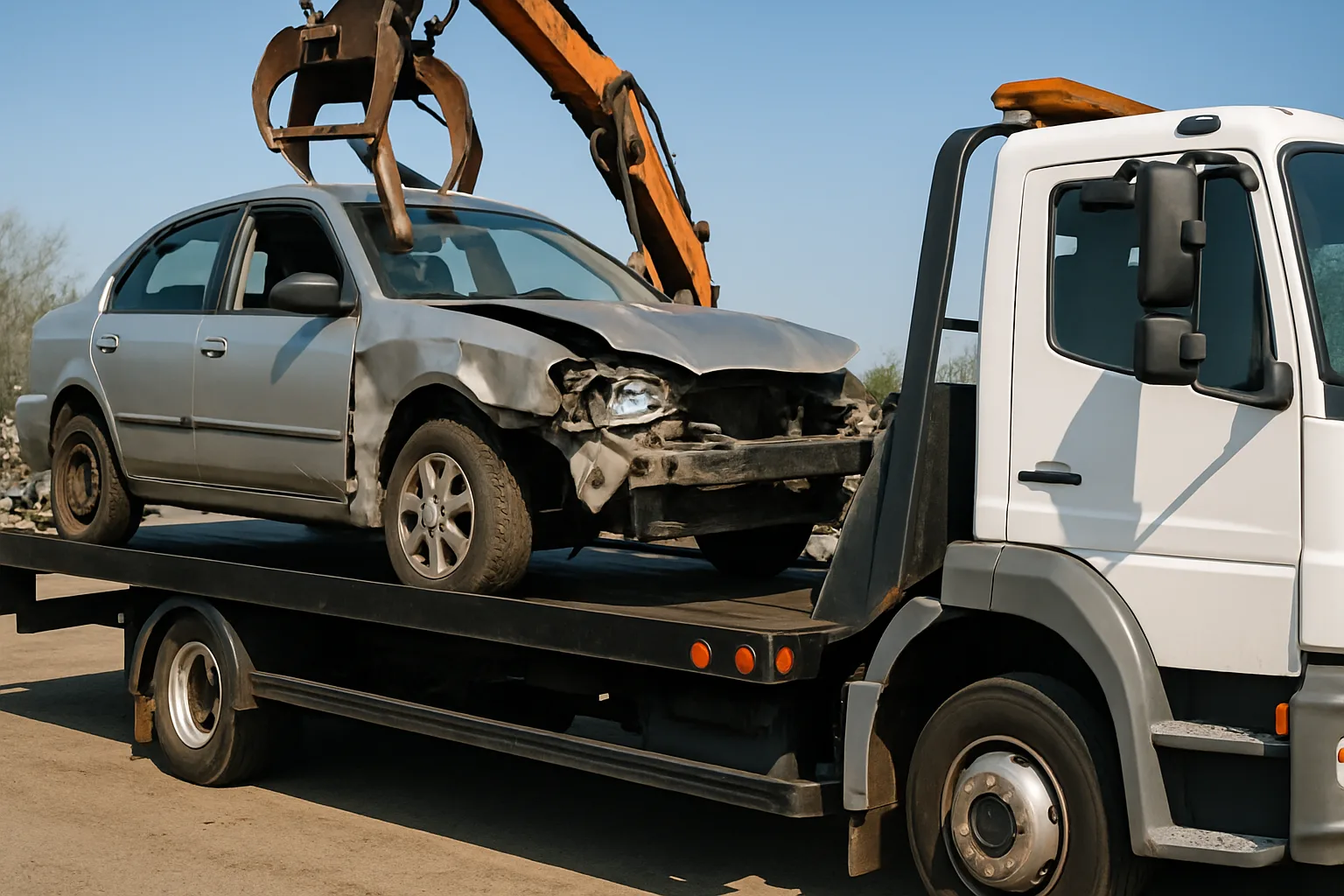
Why Your Pickup Truck or SUV Is Worth More at the Scrap Yard — and How to Capture That Value
Most people assume a dead car is a dead car. Same price, same process, same shrug from the buyer. But if you're sitting on a wrecked F-250, a rusted-out Tahoe, or a high-mileage Expedition that won't pass inspection, you're not holding the same asset as someone with a Honda Civic. Heavy vehicles — trucks, full-size SUVs, and vans — are valued fundamentally differently when they hit the scrap market. Knowing that difference could mean hundreds of dollars more in your pocket.
This week's roundup breaks down how scrap buyers calculate value on heavy vehicles, what drives the premium, and why sellers in Jersey City and across New Jersey are leaving money on the table by calling a single buyer and accepting the first offer they hear.
Weight Is the Foundation — But It's Not the Whole Story
Scrap metal pricing starts with weight. That's not a secret. A heavier vehicle contains more steel, which means more raw material for the mill. A full-size pickup truck can weigh anywhere from 4,500 to over 7,000 pounds at the curb. A compact sedan might come in at 2,800 to 3,200 pounds. That weight gap alone creates a significant price difference when a buyer is calculating scrap car value per ton.
But here's what most sellers miss: weight is the floor, not the ceiling. Buyers aren't just buying scrap steel when they pick up a heavy vehicle. They're bidding on an asset that contains multiple high-value components layered on top of the base metal price.
- Aluminum content: Trucks and SUVs often have aluminum engine blocks, transmission housings, wheels, and increasingly aluminum body panels. Aluminum trades at a significant premium over steel.
- Copper wiring: Larger vehicles have more extensive electrical systems — more wire harnesses, more copper per vehicle.
- Engine and drivetrain size: A diesel pickup has more metal in its engine block than a four-cylinder commuter car. That mass matters.
- 4WD and AWD components: Transfer cases, front differentials, and additional driveshafts add material weight and resale parts value.
When you sell my car for cash in Jersey City, a serious buyer is running mental math on all of these variables simultaneously. A single buyer on the phone isn't likely to break that down for you — they'll quote the lowest number they think you'll accept.
The Catalytic Converter Factor: Where Heavy Vehicles Really Separate Themselves
If weight is the foundation, catalytic converters are the wildcard that can dramatically change the value of a heavy vehicle. Trucks and large SUVs — especially those with larger displacement V6, V8, or diesel engines — often carry catalytic converters that contain significantly more platinum group metals (PGMs) than those found in smaller passenger cars.
Some full-size trucks and SUVs have dual exhaust systems with multiple cats. A single late-model catalytic converter from a heavy-duty application can be worth considerably more than the scrap steel value of an entire compact car. This is one of the biggest reasons that platforms like compare scrap metal bids from verified buyers are gaining traction — buyers who specialize in catalytic converter recovery will bid differently than general scrap yards, and that difference can be substantial.
If you're in Jersey City and trying to figure out what your truck's catalytic converters are worth, don't guess. The market for PGMs fluctuates based on global demand, mining output, and automotive industry trends. What a converter was worth in 2024 is not necessarily what it's worth today. That's why competitive bidding matters — it surfaces what buyers are actually willing to pay in real-time market conditions, not what a single yard tells you on a Tuesday morning.
When sellers ask about how to sell catalytic converters online or alongside a full vehicle, the answer is the same: get multiple eyes on the asset. One buyer's quote is one data point. It's not the market.
How Jersey City Sellers Are Getting More for Heavy Vehicles in 2026
Jersey City sits in one of the most active scrap metal markets in the Northeast. The density of buyers, the proximity to port facilities, and the volume of commercial and fleet vehicles in the area means there's real competition for quality heavy vehicle loads. That competition is valuable — if you know how to access it.
The problem is the traditional process. You call one yard. They send someone out. They hand you a check. You don't know if that number is fair because you have no reference point. That's the single-buyer trap, and it costs sellers across New Jersey real money every week.
SMASH was built to break that pattern. Instead of calling one buyer, sellers put their vehicle in front of vetted, competitive buyers who bid against each other. The inventory tool lets you document your vehicle properly — photos, VIN lookup, condition notes — so buyers have the information they need to bid with confidence. More information means stronger bids. Stronger bids mean better price discovery for the seller.
For heavy vehicles specifically, this matters even more. A full-size truck or SUV has more variables that affect its value. A buyer who reviews proper documentation — photos of the catalytic converter, engine condition, body panel materials — can bid more aggressively than a buyer guessing over the phone. Free scrap car pickup from GetMyScrapCar connects sellers to this process without the friction of cold-calling yards and waiting for callbacks.
Scrap Car Value Per Ton: What the Numbers Actually Mean for Trucks and SUVs
Let's talk about how scrap car value per ton translates to real numbers for heavy vehicles. Steel prices fluctuate — always have, always will. Prices in this article are general context only. Always check current rates before making a selling decision. That said, the math is directional and useful.
A vehicle that weighs 3 tons at the scale yields roughly 1.5x to 2x the base scrap return of a vehicle that weighs 1.5 tons — before you factor in non-ferrous materials, catalytic converter value, or any parts that can be pulled for resale. When you stack all of those variables together, the gap between a heavy vehicle's scrap value and a compact car's scrap value is not linear. It's exponential in the seller's favor.
Here's a simplified breakdown of the premium drivers for heavy vehicles:
- Base steel weight: More pounds of ferrous metal at per-ton market rate.
- Non-ferrous content: Aluminum, copper, and other metals at their respective premiums.
- Catalytic converter value: PGM content scales with engine displacement and system design.
- Salvage parts potential: Engines, transmissions, and 4WD components have aftermarket demand that sophisticated buyers factor in.
- Condition documentation: A seller who can prove their vehicle's condition with photos and a VIN-verified record gets better bids than a seller who can't.
If you're searching for a sell car for scrap quote in Jersey City, understanding these layers helps you evaluate whether the number you're being offered reflects the actual composition of your vehicle — or just someone's lowball guess.
What to Do Before You Call Anyone: Document Your Vehicle First
Most sellers undercut themselves before the first conversation even starts. They don't document their vehicle, they can't describe it accurately, and they accept whatever the first buyer says because they have nothing to compare it to.
Before you schedule pickup — whether you're in Jersey City, Newark, Hoboken, or anywhere in New Jersey — do this:
- Pull the VIN: Buyers use VIN data to confirm make, model, trim, engine, and drivetrain. Having this ready signals you're a serious seller.
- Take photos: Underhood, undercarriage, interior, all four corners. Document the catalytic converter location if possible.
- Note what's missing: Catalytic converter removed? Battery gone? Wheels missing? Be upfront. Buyers factor this in anyway — honesty just speeds up the process.
- Know the weight class: Look up your vehicle's curb weight. It takes 30 seconds and it gives you a baseline for evaluating any offer.
SMASH's platform is built around this documentation process. The inventory tool, VIN lookup, and photo documentation features exist specifically to give buyers the data they need to bid confidently. Better bids don't come from guessing — they come from information.
Once you're ready, schedule your free scrap car removal and let the market tell you what your vehicle is actually worth. You might be surprised what competition does for the number.
Want to go deeper on how scrap pricing works for different vehicle types? Read more junk car removal guides for practical breakdowns that help you sell smarter.
Closing Take: Heavy Vehicles Deserve Heavy Attention
The scrap market in 2026 is not forgiving to sellers who undervalue their assets. Metal markets move fast. Buyer demand shifts. The seller who calls one yard and accepts the first number will always leave something on the table — especially with a heavy vehicle that has multiple layers of recoverable value.
If you're in Jersey City or anywhere across New Jersey with a truck, SUV, or van that's reached the end of its road, don't treat it like a compact sedan. It isn't one. It weighs more, carries more non-ferrous material, and likely has catalytic converter value that most single-buyer quotes don't fully account for.
Get it in front of competitive, vetted buyers. Document it properly. Let the bids tell you the real number. Cash for junk cars in Jersey City doesn't have to mean accepting whatever someone offers at the door. The market is more competitive than that — if you know how to access it.
When you're ready to move, get a free quote for your scrap car and schedule free pickup at GetMyScrapCar. No subscription, no games — just a straightforward process that puts your vehicle in front of buyers who are actually competing for it.
Frequently Asked Questions
Q: Why is my truck worth more for scrap than a regular car?
Trucks and SUVs are heavier, which means more steel by weight. But they also contain more aluminum, more copper wiring, larger catalytic converters, and more complex drivetrains — all of which add value beyond the base metal price. A heavy vehicle has multiple premium components that a compact car simply doesn't carry.
Q: How do I get cash for junk cars in Jersey City?
The fastest route is to document your vehicle — photos, VIN, condition — and get it in front of multiple buyers rather than calling one yard. Platforms like SMASH connect sellers to vetted buyers who bid competitively. GetMyScrapCar handles the pickup logistics across Jersey City and the surrounding area.
Q: Does removing the catalytic converter before scrapping affect my payout?
Yes, significantly. If your catalytic converter is intact and the vehicle is a heavy-duty truck or large SUV, that converter can represent a substantial portion of the vehicle's total scrap value. Removing it separately and selling it through a specialized channel may make sense — or it may not, depending on current PGM prices. Get quotes both ways before deciding.
Q: What documents do I need to sell my car for cash in New Jersey?
In New Jersey, you'll generally need a clean title to complete a legal sale. If the title is lost, the DMV has a replacement process. Some buyers will also accept a signed odometer disclosure and bill of sale for certain older vehicles — confirm with your buyer before pickup day.
Q: How long does free scrap car pickup take in Jersey City?
Pickup timelines vary by provider and demand, but many services operating in Jersey City can schedule same-day or next-day removal once you confirm your quote. Having your documentation ready — title, photos, VIN — speeds the process up considerably. The fewer surprises on pickup day, the smoother it goes.
Stay sharp on scrap metal market trends and industry updates — follow SMASH on LinkedIn for weekly insights from across North America's recycling market.