From Assembly Line to Auction Block: What Really Happens to Your Car Over Its Lifetime
Most cars on the road today will eventually end up in a scrap yard. That's not a pessimistic take — it's just how the lifecycle works. In fact, roughly 12 to 15 million vehicles reach end-of-life in the United States every year. If you're sitting on an old clunker in Lansing and wondering whether it's time to sell scrap car Lansing style, understanding the full journey your car takes — from factory floor to final crusher — can help you make a smarter decision about timing and value.
This isn't a sentimental piece about the car you learned to drive in. It's a practical breakdown of how vehicles age, lose value, and ultimately become a commodity measured in tons of steel and pounds of non-ferrous metal. And if you play it right, that final stage still puts real cash in your pocket.
Stage One: Manufacturing and the Materials That Matter
Before your car ever rolled off a dealer lot, it started as raw material. A typical passenger vehicle contains approximately 2,400 to 3,500 pounds of steel, along with aluminum, copper wiring, lead-acid batteries, platinum-group metals in the catalytic converter, and a mix of plastics and rubber. Auto manufacturers source these materials globally, and the prices they pay ripple outward into the recycling market decades later.
The steel frame, the aluminum engine block, the copper in the wiring harness — none of it disappears. It cycles. When a car finally hits a Michigan scrap yard, processors aren't junking it. They're harvesting it. Every load that comes off a flatbed gets broken down and sorted by material type, just the same way a recycler tracks non-ferrous cores or cats by serial number. The value was always in the materials. The car was just their temporary shape.
- Steel and iron: The bulk of the vehicle's weight and value
- Aluminum: Engine components, wheels, body panels on newer models
- Copper: Wiring, motors, radiators
- Catalytic converters (cats): Contain palladium, platinum, and rhodium — often the highest-value single component
- Lead-acid batteries: Fully recyclable, bought and sold separately
Understanding this matters when you're ready to sell. The weight of your vehicle, its make and model, and whether the catalytic converter is still intact all affect what a buyer will offer. A stripped-out shell with a missing cat and no battery is worth significantly less than a complete vehicle.
Stage Two: The Long Depreciation — Where Most Owners Lose Money
Here's the blunt truth about car ownership: most vehicles lose 15 to 25 percent of their value in the first year alone. By year five, they've dropped roughly 60 percent from their original sticker price. By the time a car is 10 to 15 years old, it's either still running on sentimental value and repair bills, or it's sitting in a driveway collecting rust.
This is the stage where Michigan vehicle owners make their biggest financial mistake — holding on too long. Every year a car sits unmoved, parts corrode, fluids degrade, and tires go flat. The frame weakens. The catalytic converter might even walk off on its own in some neighborhoods. The window between "this car still has solid scrap value" and "this car is a liability" is shorter than most people think.
Mechanical repairs become the real test. When the cost of fixing the car exceeds its market value — and sometimes its entire scrap value — that's the signal. A transmission replacement on a 15-year-old sedan might run $2,500 to $4,000. If the car's scrap value is $400, the math doesn't work. That's not a repair. That's throwing money into a hole.
Stage Three: End-of-Life — What "Totaled" Really Means
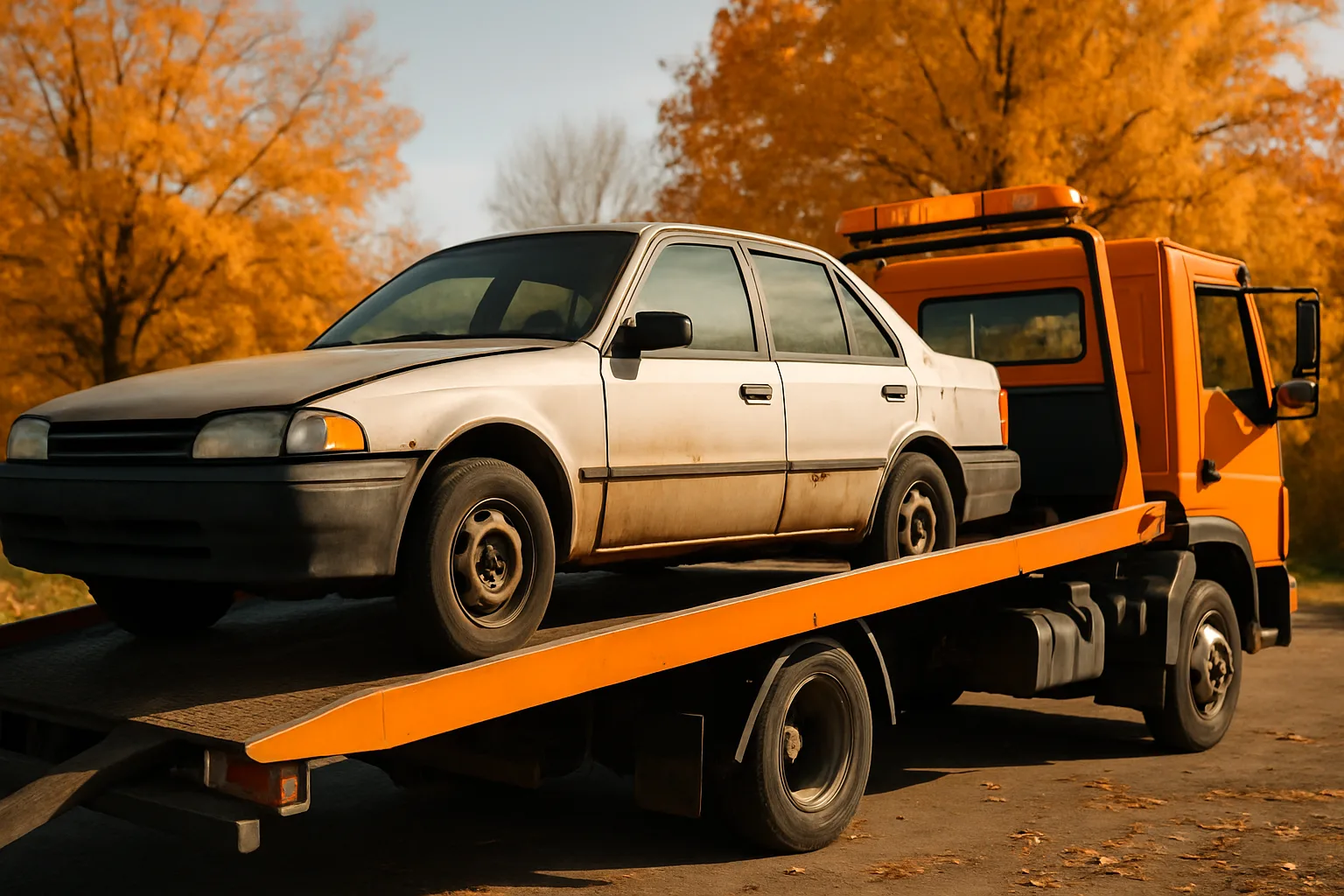
Vehicles exit service in a few different ways. Some get totaled in accidents and go directly to salvage auctions. Some fail emissions or safety inspections in states with strict regulations. Some just stop being worth fixing. And some sit until the owner finally decides enough is enough and schedules free scrap car pickup from GetMyScrapCar.
When a vehicle is declared end-of-life, the title transfer process kicks in. In Michigan, you'll need a clear title to legally sell your vehicle for scrap. Lost title? Not always a dealblock — but it adds a step. Michigan's Secretary of State office handles duplicate title requests, and some buyers will work with bonded titles depending on the situation. Get this sorted before you call anyone, because a buyer who shows up and finds a title problem will walk — or lowball you.
The actual end-of-life processing follows a predictable sequence:
- Depollution: Fluids are drained — oil, coolant, brake fluid, transmission fluid, refrigerant. This is regulated under federal and state environmental rules.
- Parts harvesting: Usable components — doors, seats, alternators, engines — get pulled for resale at salvage yards.
- Cat and battery removal: High-value items come off first, often tracked individually.
- Shredding: The remaining hulk gets flattened and fed into an industrial shredder.
- Material sorting: Shredded output gets separated by material type — ferrous, non-ferrous, fluff — using magnets, eddy current separators, and density separation.
- Baling and sale: Sorted material gets baled or loose-loaded and sold to mills and foundries.
That last step — the sale — is where platforms like SMASH change the equation. Instead of one processor calling one mill at a negotiated rate, a find the best price for your scrap on SMASH auction-style approach brings multiple vetted buyers into competition. More buyers, better price discovery. That's not a slogan — it's basic market mechanics.
How Scrap Car Value Is Actually Calculated — and What It Means for Lansing Sellers
When you ask "how much is my car scrap value," you're really asking several questions at once. The answer depends on a handful of variables that change week to week.
Current steel prices: The bulk of a vehicle's scrap weight is steel. When hot-rolled coil or shredded steel prices move at the mill level, your car's base value moves with them. These prices fluctuate based on global demand, domestic production levels, and trade policy. Check current rates before you accept any offer — don't rely on what you heard six months ago.
Vehicle weight: Heavier vehicles — full-size trucks, SUVs, vans — generate more revenue per unit than compact sedans. Simple math. A 2008 F-250 has more recyclable steel than a 2005 Civic. Lansing has plenty of both on its streets, and buyers know the difference.
Completeness: Is the catalytic converter still attached? Are all four wheels present? Is the engine block intact? Missing components reduce value — sometimes significantly, especially on cats, which contain precious metals that get priced separately from ferrous bulk.
Local demand: Buyer competition in your specific area affects your offer. A Lansing yard that's actively filling a load this week may bid higher than one that's already at capacity. This is exactly why a platform like SMASH — a scrap metal auction platform — creates better outcomes. It introduces competition where there was only a single phone call before.
Disclaimer: Scrap metal prices fluctuate daily based on market conditions. Always check current rates and get multiple quotes before making a decision.
Free Scrap Car Pickup in Lansing — What the Process Actually Looks Like
If you've never sold a junk car before, the process feels more complicated than it is. Here's what free scrap car pickup Lansing looks like in practice when you work with a legitimate buyer.
You provide basic vehicle information — year, make, model, rough condition, whether it runs, and the title status. You get a quote. If it works for you, you schedule a pickup window. A tow truck shows up, the driver inspects the vehicle, you sign the title over, and you get paid — usually cash or check on the spot. The vehicle leaves. You don't pay for the tow. That's it.
What you should watch out for:
- Buyers who quote high on the phone and then drop the offer when they arrive — lowballing after the fact is a red flag
- Anyone who asks you to sign a blank title
- Buyers who can't provide a receipt or documentation of the transaction
- Offers that don't include free towing — legitimate services cover this
If you're in Michigan and want to skip the guesswork, schedule your free scrap car removal with a service that's transparent upfront. No surprise deductions at the curb. SMASH connects yard operators and buyers through a vetted, competitive auction model — so whether you're a private seller or a yard moving volume, the price you see reflects actual market demand, not someone's best guess on a Tuesday morning. For more guidance on how the whole process works, read more junk car removal guides that cover everything from title transfers to what happens to your car after pickup.
Why Timing Your Sale Matters More Than You Think
Steel markets move. Catalyst metal prices — especially rhodium and palladium — can swing dramatically in short windows. The car sitting in your Lansing driveway right now has a different scrap value than it did six months ago, and it will have a different value six months from now. Waiting rarely works in the seller's favor when it comes to an aging vehicle.
Depreciation is a one-way street. Your car isn't aging into value. It's aging out of it. Every season of Michigan winters adds rust. Every month without movement degrades seals, belts, and tires. The free junk car removal for cash you could collect today is almost certainly more than you'll collect in two years after the frame has started to rot.
The smartest move is to get a quote now, compare it to what you'd spend keeping the car running, and make a data-based decision — not an emotional one. If the repair math doesn't work, the scrap math probably does. Reach out, get your quote, and sell scrap car in Michigan on your terms before the market moves or the vehicle deteriorates further. If you're ready to move forward, get a free quote and schedule your free scrap car removal — no pressure, no hidden fees, just a straightforward offer for a vehicle you're done with.
Frequently Asked Questions
Q: How do I sell a scrap car in Lansing, Michigan?
Start by gathering your vehicle's title, year, make, model, and condition details. Contact a licensed scrap car buyer or service like GetMyScrapCar to get a quote. If you accept the offer, schedule a free pickup — the tow truck comes to you, you sign over the title, and you get paid on the spot. No need to drive the car anywhere.
Q: How much is my car's scrap value in Lansing?
Scrap value depends on the vehicle's weight, completeness (especially the catalytic converter), current steel prices, and local buyer demand. Prices fluctuate regularly, so it's worth getting a current quote rather than relying on old estimates. Heavier vehicles like trucks and SUVs generally return more than compact sedans.
Q: Do I need a title to sell my scrap car in Michigan?
Yes — Michigan requires a clear title for legal vehicle transfer. If you've lost your title, you can apply for a duplicate through the Michigan Secretary of State. Some buyers may work with alternative documentation in specific circumstances, but having your title ready speeds up the process significantly.
Q: Is free scrap car pickup in Lansing actually free?
With legitimate services, yes. Reputable buyers cover towing costs as part of the deal — you should never pay out of pocket for pickup. Be cautious of buyers who quote a price over the phone and then subtract towing fees when they arrive. A trustworthy buyer is transparent about the total offer upfront.
Q: What happens to my car after it's picked up for scrap?
The vehicle goes through a depollution process where fluids are removed safely. Usable parts may be harvested for resale. The remaining shell is shredded and sorted by material — steel, aluminum, copper, and other metals — then sold to mills and foundries. High-value components like catalytic converters are tracked and sold separately through platforms like SMASH.
---Follow SMASH on LinkedIn for industry updates, scrap metal market insights, and news on how competitive auctions are changing the way yards and buyers do business across North America.