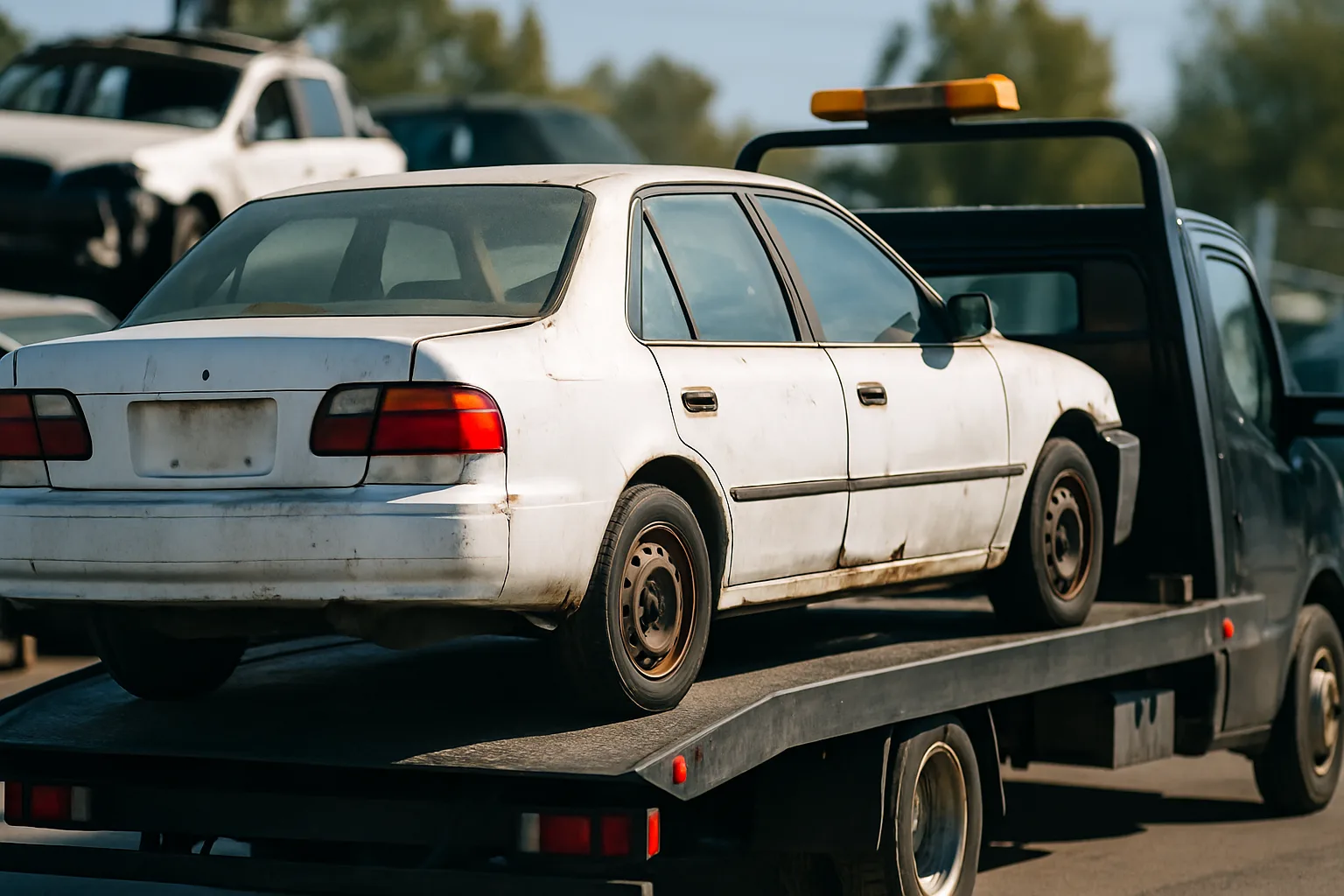
Most people never think about where their car goes after they're done with it. They drive it until it breaks down, trade it in, or let it sit in the driveway collecting dust. But every vehicle has a full lifecycle — from the assembly line to the scrap yard — and understanding that journey can actually put money in your pocket when it's time to let go.
If you're sitting on an old vehicle in Las Vegas and wondering whether it's worth anything, the answer is almost always yes. Even a car that won't start has value — in steel, aluminum, copper, and a handful of other materials that recyclers pay real money for. Knowing how that value works helps you make smarter decisions when you're ready to sell my car fast Las Vegas.
Stage One: The Factory Floor — Where the Raw Materials Begin
A new vehicle rolls out of the factory carrying roughly 2,400 pounds of steel, 300–400 pounds of aluminum, and dozens of other metals including copper wiring, platinum-group metals in the catalytic converter, and small amounts of rare earth elements in sensors and motors. That's not just engineering — that's a future inventory of recyclable commodities.
Auto manufacturers source these materials from global markets. Steel mills, aluminum smelters, and metal refiners feed raw material into the supply chain. What most drivers don't realize is that a significant portion of that steel — sometimes over 25% — is already made from recycled scrap. The lifecycle is circular from the very beginning. The car you're scrapping today may have been partially built from someone else's scrapped car a decade ago.
- Steel: The dominant material by weight — frame, body panels, axles
- Aluminum: Engine blocks, wheels, hoods on newer models
- Copper: Wiring harnesses throughout the vehicle
- Platinum, palladium, rhodium: Inside the catalytic converter
- Plastics and rubber: Interior components, hoses, tires
Every one of those materials has a recovery value at the end of life. That's the foundation of the entire scrap car economy.
Stage Two: Years of Use — How a Vehicle Loses (and Keeps) Its Value
A car depreciates fast in its first few years — most lose 20–30% of their retail value in year one alone. By years seven to ten, retail resale value has dropped significantly, but the scrap and parts value starts holding more stable ground. The steel in your 2012 pickup truck is worth roughly the same as the steel in a brand-new one.
This is where geography plays a role. In a hot, dry climate like Nevada, vehicles often rust less than those driven in the Midwest or Northeast, where road salt accelerates corrosion. A Las Vegas vehicle with a clean frame and intact panels may actually yield better scrap value than a comparable car from a northern state, simply because the metal is in better condition. Scrap yards pay for quality metal — not just volume.
As a vehicle ages, its maintenance costs eventually outpace its market value. That's the tipping point. When you're spending more to keep it running than it would cost to replace it — or when a repair estimate exceeds what the car is worth — you've entered end-of-life territory. At that point, your best move isn't another mechanic visit. It's understanding what the scrap market will pay you.
Stage Three: The End-of-Life Decision — What Happens Before the Scrap Yard
Before a vehicle reaches a recycler, it typically passes through one of a few channels. Some go through dealership trade-ins, where the dealer decides whether to resell, wholesale, or scrap based on condition. Others go directly to private sale, then eventually to a salvage auction when the next owner gives up. Many sit in driveways for months or years before the owner finally asks: what's this thing actually worth to a scrap yard?
In Nevada, a vehicle that has been sitting unregistered for too long can create paperwork headaches — but most reputable junk car buyers handle title issues routinely. If you've lost the title, that's rarely a dealbreaker. Services that specialize in junk car buyers near me for cash no title know how to work through that process legally and efficiently. Don't let missing paperwork stop you from getting paid.
The practical checklist before calling a buyer looks like this:
- Locate the title if you have it — it speeds everything up
- Remove personal items from the vehicle
- Note the make, model, year, and approximate weight
- Check if any major parts are missing (catalytic converter, battery, wheels)
- Know whether the car is drivable or requires a flatbed
That information is what a buyer needs to give you an accurate quote. The more specific you are upfront, the fewer surprises at pickup.
Stage Four: The Scrap Yard — Where the Real Recycling Happens
Once a vehicle reaches a licensed recycler, the process is methodical. First, fluids are drained — oil, coolant, transmission fluid, brake fluid, and refrigerant are all recovered and either recycled or disposed of safely per EPA guidelines. This step is legally required and environmentally critical. A 2026 vehicle contains multiple fluids that can't just be drained into the ground.
After depollution, valuable components get pulled before the car ever sees a crusher. Catalytic converters are removed and sent to precious metal refiners. Engines and transmissions with remaining life go to parts yards. Batteries — increasingly valuable as demand for recycled lead and lithium grows — are separated. Tires get shredded or resold.
What's left goes to the shredder. A car shredder can process a full vehicle in under a minute, producing a mix of ferrous and non-ferrous metal fragments. Those fragments get sorted by grade, baled or prepared for shipment, and sold to steel mills and smelters. The steel re-enters manufacturing. Some of it ends up in new cars. The circle closes.
For Las Vegas scrap yards, proximity to freight routes and regional mills affects what they'll pay per ton. If you want to understand what your vehicle is worth in today's market, platforms like SMASH Scrap — where verified buyers bid on your metal give sellers real price discovery through competitive bidding rather than a single take-it-or-leave-it offer. That kind of transparency matters when you're trying to get fair value for a load — whether it's a single car or a full yard's inventory.
How Las Vegas Sellers Can Get the Most Out of This Process
Las Vegas has a dense concentration of auto recyclers, salvage yards, and junk car buyers — which is actually good news for sellers. Competition among buyers means better prices if you know how to work the system. The mistake most people make is calling one buyer, accepting the first number, and scheduling pickup without shopping around.
Here's what experienced sellers in Nevada do differently:
- Get at least two or three quotes before committing
- Ask specifically whether the catalytic converter is still on the car — that affects the offer significantly
- Ask whether the quote is guaranteed or subject to change at pickup
- Confirm free towing is included — reputable cash for junk cars Las Vegas services don't charge for pickup
- Understand whether they're paying scrap weight or running a parts-based evaluation
For vehicles with salvageable parts — a working engine, a solid transmission, intact body panels — parts-based buyers may pay more than straight scrap. For stripped, high-mileage vehicles, scrap weight is likely the determining factor. Knowing which category your car falls into before you call saves time and negotiation.
If you're ready to skip the research and just get a reliable quote, free scrap car pickup from GetMyScrapCar is a straightforward starting point. They work with sellers across Nevada and handle the logistics so you don't have to.
Why the Scrap Car Economy Matters Beyond Your Driveway
Scrapping a vehicle isn't just a financial transaction — it's a supply chain contribution. Steel mills across North America depend on scrap metal as feedstock. Recycled steel uses significantly less energy to produce than virgin steel from iron ore. Every car that gets properly recycled reduces mining demand, lowers industrial energy consumption, and keeps hazardous fluids out of groundwater.
In 2026, with raw material costs remaining volatile and domestic manufacturing under pressure to source locally, recycled scrap has real economic and strategic value. When you schedule your free scrap car removal, you're not just clearing your driveway — you're feeding a supply chain that builds infrastructure, appliances, and yes, new vehicles.
Platforms like SMASH exist because that scrap has real market value, and sellers deserve competitive price discovery rather than a guessing game. Whether you're a yard operator moving bulk loads or an individual owner with a single end-of-life vehicle, the principle is the same: more buyers bidding means a better read on what your metal is actually worth. For more context on how junk car removal works from a seller's perspective, read more junk car removal guides on the GetMyScrapCar blog.
If you're in Las Vegas and ready to act, you can explore Las Vegas scrap metal services to find local options that match your timeline and vehicle type.
When you're done reading and ready to move, getting a quote takes minutes. Get a free quote for your scrap car and schedule your free pickup at getmyscrapcar.com — no pressure, no subscription, no runaround. Just a fair look at what your vehicle is worth today.
Frequently Asked Questions
Q: How do I sell my car fast in Las Vegas without a title?
Many junk car buyers in Las Vegas accept vehicles without a title, especially if you can provide a valid photo ID and proof of ownership like registration. The buyer typically handles the paperwork process on their end. Always confirm this upfront before scheduling pickup so there are no surprises.
Q: What's my scrap car worth in Las Vegas right now?
Scrap car value depends on the vehicle's weight, metal composition, condition, and current scrap metal market prices — which fluctuate regularly. A standard passenger car typically yields several hundred dollars at scrap weight, though vehicles with intact catalytic converters or salvageable parts may fetch more. Always get a current quote rather than relying on old estimates. Prices fluctuate — check current rates before making decisions.
Q: Do junk car buyers in Las Vegas offer free towing?
Most reputable cash for junk cars services in Las Vegas include free towing as part of the offer. If a buyer tries to deduct a towing fee from your quote at pickup, that's a red flag. Confirm free pickup is included before you agree to anything.
Q: How long does the scrap car removal process take in Nevada?
In most cases, you can get a quote same-day and schedule pickup within 24–48 hours. Some services in Las Vegas offer same-day removal depending on availability. The actual pickup typically takes less than 30 minutes once the tow truck arrives.
Q: Does the condition of my car affect the scrap price?
Yes, but perhaps not as dramatically as you'd expect. The primary driver for scrap pricing is metal weight and composition. However, missing components like the catalytic converter, battery, or major engine parts can reduce your offer. A complete vehicle — even a non-running one — almost always commands a better price than a stripped shell.
Stay current on scrap metal market trends and industry news by following SMASH on LinkedIn — practical updates for recyclers, yard operators, and sellers across North America.